AP Matched and Modified Receipts
Description:
Imported from BI Publisher Description: Matched and Modified Receipts Report Application: Payables Source: Matched and Modified Receipts Report (XML) - Not Supported: Reserved For Future Use Short Name: APXMTMRR_XML DB package: AP_APXMTMRR_XMLP_PKG
Parameters
Operating Unit, Supplier Name, Supplier Site, Receipt Modify Date From, Receipt Modify Date To, Invoice Status
Used tables
ap_invoices_all, ap_invoice_lines_all, po_vendors, po_vendor_sites_all, po_headers_all, rcv_shipment_headers, rcv_shipment_lines, rcv_transactions, ap_lookup_codes, hr_all_organization_units_vl, mo_glob_org_access_tmp, dual
Categories
Related reports
AP Invoice Upload 11i, AP Invoices and Lines, PO Headers and Lines 11i
Dependencies
If you would like to try one of these Oracle EBS SQLs without having Blitz Report installed, note that some of the reports require functions from utility package xxen_util.
Example Report
AP Matched and Modified Receipts 16-Jul-2024 081411.xlsx
Report SQL
www.enginatics.com/reports/ap-matched-and-modified-receipts/
Blitz Report™ import options
AP_Matched_and_Modified_Receipts.xml
Case Study & Technical Analysis: AP Matched and Modified Receipts
1. Executive Summary
Business Problem
In a high-volume Accounts Payable environment, the “Three-Way Match” (PO, Receipt, Invoice) is the gold standard for control. However, operational reality often complicates this: warehouse staff may adjust a receipt (e.g., correct a quantity error or process a return) after the AP team has already matched an invoice to that receipt. This sequence of events creates “Matched and Modified” exceptions, leading to:
- Invoice Holds: Invoices suddenly reverting to “Quantity Variance” holds.
- Accrual Imbalances: The General Ledger accrual account remaining open because the receipt and invoice no longer net to zero.
- Overpayment Risk: Paying for goods that were subsequently returned or adjusted down.
Solution Overview
The AP Matched and Modified Receipts report is a specialized audit tool designed to detect these specific timing conflicts. It identifies receipts that have been matched to an AP invoice but were subsequently modified within a specified date range. This allows the AP and Purchasing departments to proactively identify discrepancies before they become month-end reconciliation nightmares.
Key Benefits
- Proactive Variance Detection: Catch receipt changes that impact already-processed invoices.
- Hold Resolution: Quickly identify the root cause of “Qty Rec” holds that appear on previously valid invoices.
- Vendor Compliance: Monitor suppliers or internal processes that frequently require retroactive receipt adjustments.
2. Technical Analysis
Core Tables and Views
The report relies on the intersection of Payables and Receiving history:
AP_INVOICES_ALL/AP_INVOICE_LINES_ALL: Identifies the invoice and the specific line matched to a receipt (MATCH_TYPE= ‘ITEM_TO_RECEIPT’).RCV_TRANSACTIONS: The source of truth for receipt history. It tracks the original receipt (TRANSACTION_TYPE= ‘RECEIVE’) and any subsequent corrections or returns (CORRECT,RETURN TO VENDOR).RCV_SHIPMENT_HEADERS/RCV_SHIPMENT_LINES: Provides context about the shipment and receipt numbers.PO_VENDORS: Supplier master data.
SQL Logic and Data Flow
The logic focuses on the temporal relationship between the Invoice Match and the Receipt Modification.
- Match Identification: The query selects invoice lines where
RCV_TRANSACTION_IDis populated, establishing the link to Receiving. - Modification Filter: It filters for
RCV_TRANSACTIONS(or related history tables) where theLAST_UPDATE_DATEfalls within the user-specified “Receipt Modify Date” range. - Status Check: It often includes logic to check the current status of the invoice (
AP_INVOICES_ALL.STATUS) to prioritize those that are currently blocked or require re-validation.
Integration Points
- Inventory/Receiving: This report is essentially a quality control check on the Receiving process.
- Payables: It directly impacts the “Invoice Validation” workflow.
3. Functional Capabilities
Parameters & Filtering
- Receipt Modify Date From/To: The primary filter. Users should run this for the current period to catch recent changes.
- Supplier Name: Filter for specific vendors known for shipping errors or returns.
- Invoice Status: Allows users to focus on ‘Validated’ invoices (which might need to be cancelled/adjusted) or ‘Needs Revalidation’ invoices (which are already on hold).
Performance & Optimization
- Date-Driven: By filtering on modification dates, the report limits the dataset to active operational windows, ensuring fast execution even in databases with millions of historical receipts.
4. FAQ
Q: What constitutes a “Modified” receipt? A: A modification includes any transaction that alters the net quantity received, such as a “Correction” (positive or negative) or a “Return to Vendor” transaction that occurs after the initial receipt.
Q: Why does the report show invoices that are already paid? A: If a receipt is modified after payment (e.g., a late return), the invoice will still appear. This is critical, as it indicates a potential overpayment that requires a Debit Memo to recover funds.
Q: Does this report fix the data? A: No, it is a reporting tool only. Correcting the issue usually involves issuing a Credit/Debit memo in AP or correcting the receipt in Inventory, depending on the physical reality of the goods.
Oracle E-Business Suite Reporting Library
We provide an open source Oracle EBS SQLs as a part of operational and project implementation support toolkits for rapid Excel reports generation.
Blitz Report™ is based on Oracle EBS forms technology, and hence requires minimal training. There are no data or performance limitations since the output files are created directly from the database without going through intermediate file formats such as XML.
Blitz Report can be used as BI Publisher and Oracle Discoverer replacement tool. Standard Oracle BI Publisher and Discoverer reports can also be imported into Blitz Report for immediate output to Excel. Typically, reports can be created and version tracked within hours instead of days. The concurrent request output automatically opens upon completion without the need for re-formatting.
The Filters, Columns, Rows and Values fields are used to create and deliver the data in pivot table format with full drill down to details.
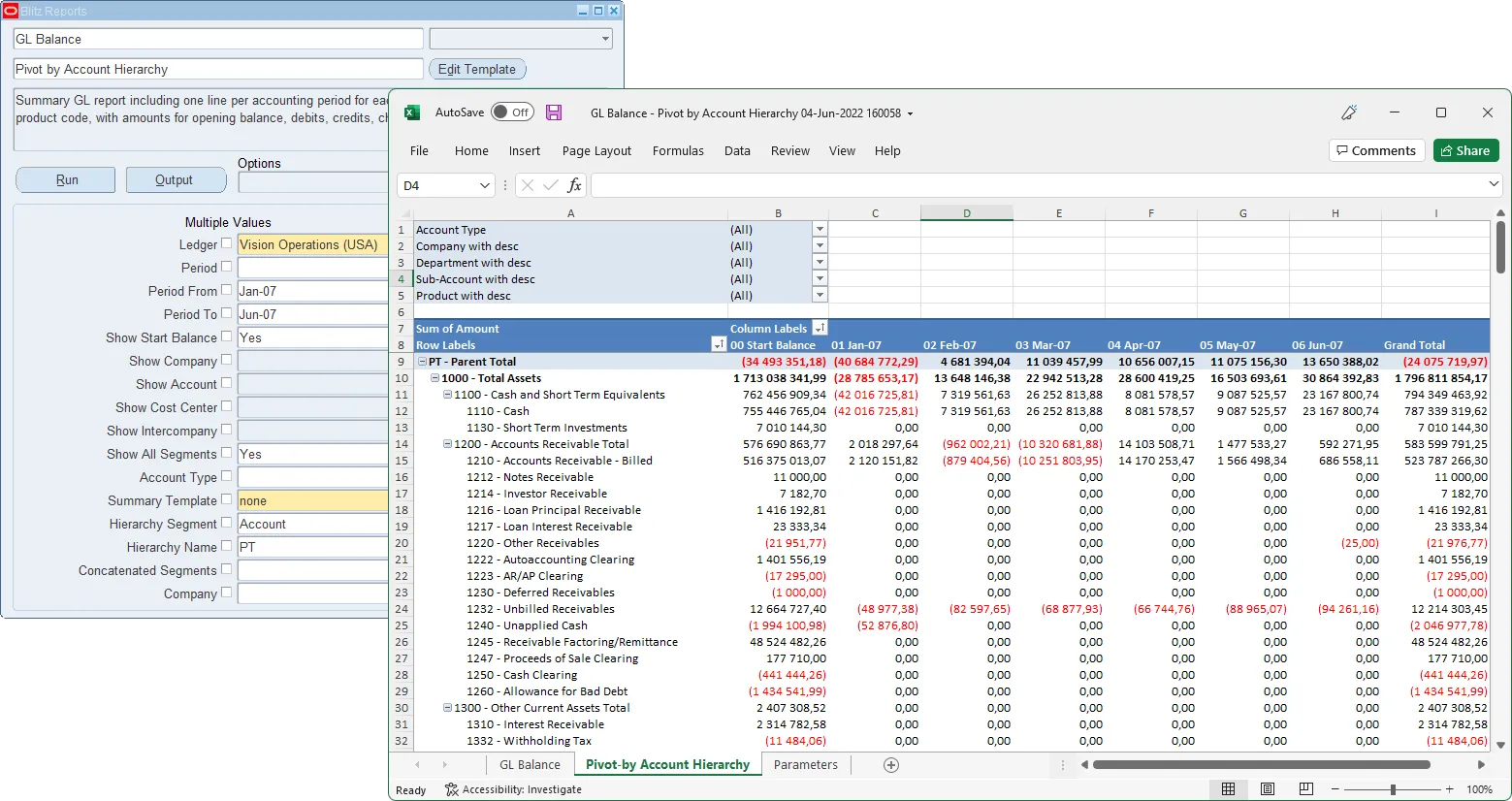
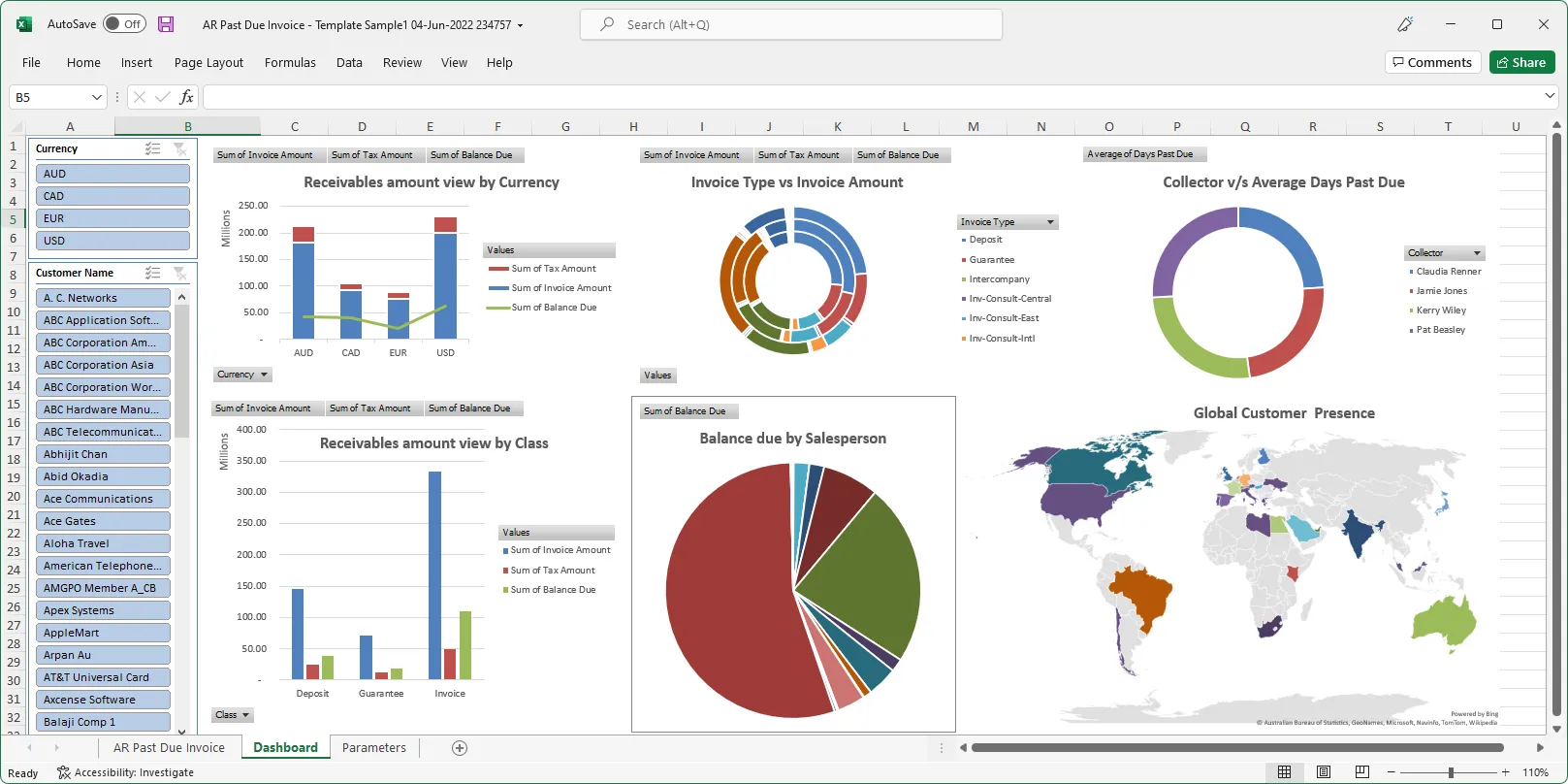
The Excel template upload functionality in Blitz Report allows users to create their own layouts by uploading an Excel template with additional sheets and charts, automatically refreshed when the report runs again. This allows to create custom dashboards and more advanced visualizations of report data.
You can download and use Blitz Report free of charge for your first 30 reports.
The installation and implementation process usually takes less than 1 hour; you can refer to our installation and user guides for specific details.
If you would like to optimize your Oracle EBS implementation and or operational reporting you can visit www.enginatics.com to review great ideas and example usage in blog. Or why not try for yourself in our demo environment.
Useful Links
Blitz Report™ – World’s fastest data upload and reporting for Oracle EBS
Oracle Discoverer replacement – importing worksheets into Blitz Report™
Blitz Report™ Questions & Answers
Supply Chain Hub by Blitz Report™
© 2025 Enginatics