AR Transaction Types
Description:
Imported from BI Publisher Description: Print a listing of the Transaction Types Application: Receivables Source: Transaction Types Listing (XML) Short Name: RAXTTL_XML DB package: AR_RAXTTL_XMLP_PKG
Parameters
Operating Unit
Used tables
ra_cust_trx_types, ra_terms, hr_operating_units, gl_code_combinations_kfv
Categories
Dependencies
If you would like to try one of these Oracle EBS SQLs without having Blitz Report installed, note that some of the reports require functions from utility package xxen_util.
Example Report
AR Transaction Types 21-Aug-2025 223301.xlsx
Report SQL
www.enginatics.com/reports/ar-transaction-types/
Blitz Report™ import options
AR Transaction Types - Case Study & Technical Analysis
Executive Summary
The AR Transaction Types report is a configuration audit tool that lists all defined transaction types within the Oracle Receivables module. Transaction types are the fundamental building blocks of AR, defining the behavior of Invoices, Credit Memos, Debit Memos, Chargebacks, and Guarantees. This report is essential for System Administrators and Finance Managers to verify that the system’s accounting logic and operational rules are correctly configured.
Business Challenge
The behavior of every billing document is controlled by its Transaction Type.
- Accounting Integrity: If a transaction type is incorrectly set to “Post to GL = No,” sales will be recorded in the subledger but missing from the financial statements.
- Process Control: Types control whether a transaction creates a positive or negative sign (Invoice vs. Credit Memo) and whether it updates the customer’s open balance.
- Standardization: Over time, organizations may create duplicate types (e.g., “Manual Invoice” vs. “Manual Inv”), leading to inconsistent reporting.
Solution
The AR Transaction Types report provides a detailed inventory of these definitions:
- Behavioral Flags: Shows critical settings like “Open Receivable” (updates balance) and “Post to GL” (creates accounting).
- Default Accounting: Displays the default General Ledger accounts (Revenue, Receivable, Tax, Freight) mapped to each type, ensuring that AutoAccounting works as expected.
- Terms & Dates: Verifies default payment terms and date rules.
Technical Architecture
The report queries the core setup table for transaction types.
Key Tables & Joins
- Definition:
RA_CUST_TRX_TYPES_ALLis the primary table containing the configuration flags and names. - Accounting:
GL_CODE_COMBINATIONS_KFVis joined to display the human-readable account strings for the default GL accounts. - Terms:
RA_TERMSlinks to the default payment terms assigned to the type. - Organization:
HR_OPERATING_UNITSfilters the types by the specific business unit.
Logic
- Retrieval: Fetches all transaction types for the selected Operating Unit.
- Decoding: Translates internal flags (e.g., ‘INV’, ‘CM’) into user-friendly descriptions.
- Mapping: Joins to the GL code combinations to show the full account structure for each of the default accounts (Receivable, Revenue, etc.).
Parameters
- Operating Unit: The specific business entity whose configuration is being reviewed.
FAQ
Q: What does the “Open Receivable” flag do? A: If set to ‘Yes’, the transaction will increase (or decrease) the customer’s outstanding balance. If ‘No’, it is a memo-only transaction (like a Pro Forma invoice) that does not affect the amount owed.
Q: Why is the “Revenue Account” blank for some types? A: Some types might rely on AutoAccounting rules to derive the revenue account dynamically based on the item or salesperson, rather than having a hardcoded default.
Q: Can I delete a Transaction Type? A: No, once a type has been used to create a transaction, it cannot be deleted. It can only be end-dated to prevent future use.
Oracle E-Business Suite Reporting Library
We provide an open source Oracle EBS SQLs as a part of operational and project implementation support toolkits for rapid Excel reports generation.
Blitz Report™ is based on Oracle EBS forms technology, and hence requires minimal training. There are no data or performance limitations since the output files are created directly from the database without going through intermediate file formats such as XML.
Blitz Report can be used as BI Publisher and Oracle Discoverer replacement tool. Standard Oracle BI Publisher and Discoverer reports can also be imported into Blitz Report for immediate output to Excel. Typically, reports can be created and version tracked within hours instead of days. The concurrent request output automatically opens upon completion without the need for re-formatting.
The Filters, Columns, Rows and Values fields are used to create and deliver the data in pivot table format with full drill down to details.
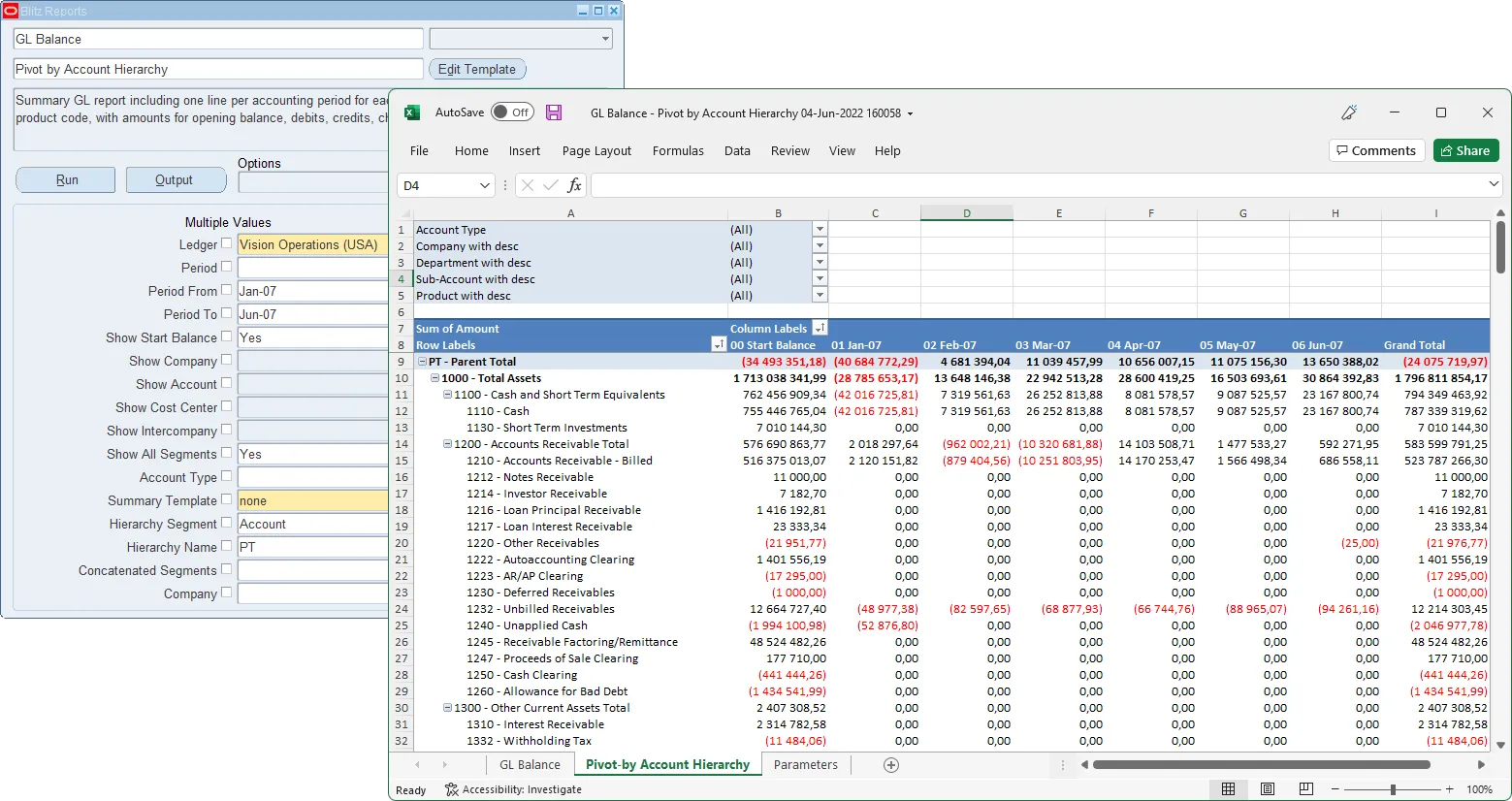
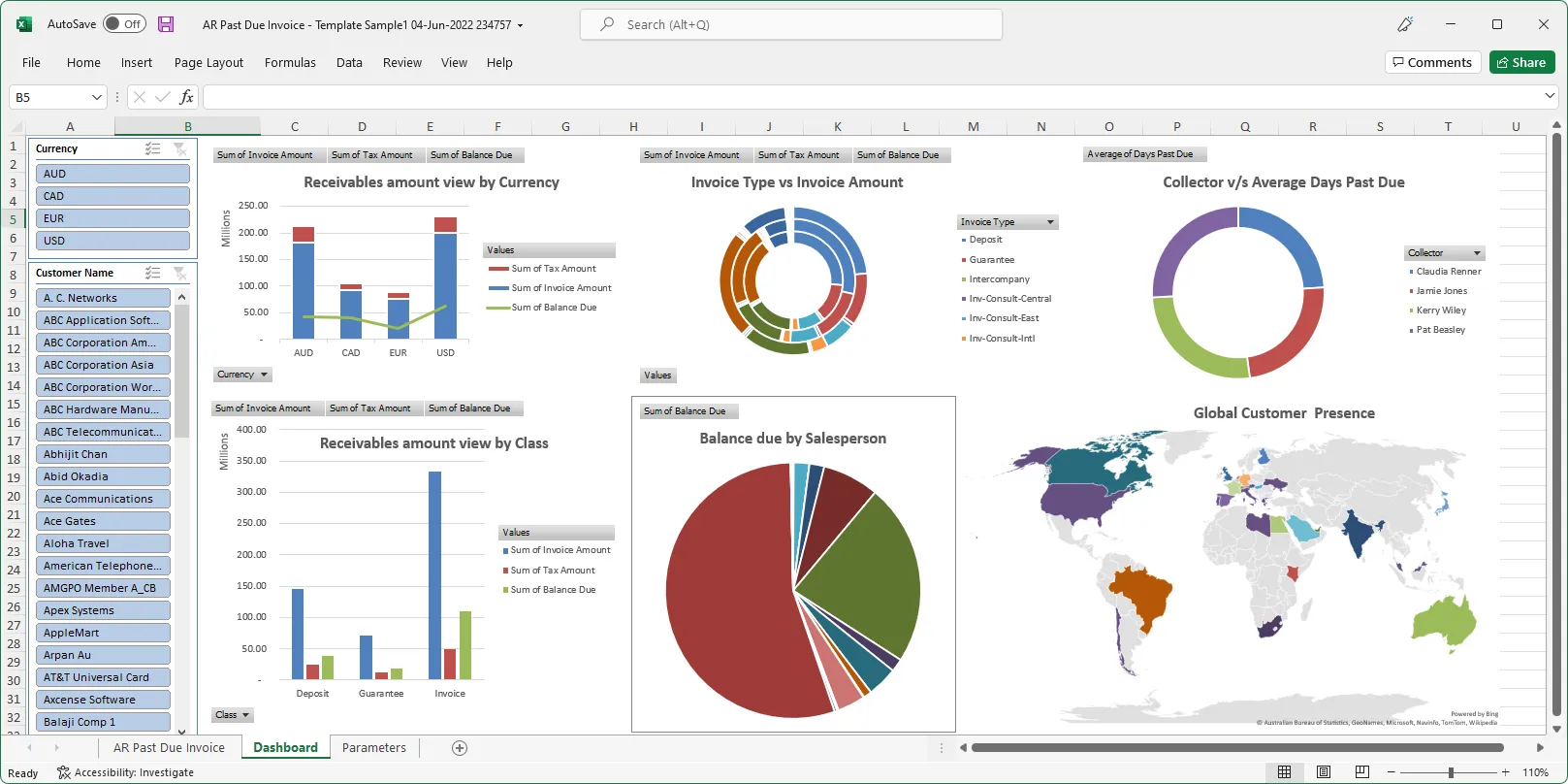
The Excel template upload functionality in Blitz Report allows users to create their own layouts by uploading an Excel template with additional sheets and charts, automatically refreshed when the report runs again. This allows to create custom dashboards and more advanced visualizations of report data.
You can download and use Blitz Report free of charge for your first 30 reports.
The installation and implementation process usually takes less than 1 hour; you can refer to our installation and user guides for specific details.
If you would like to optimize your Oracle EBS implementation and or operational reporting you can visit www.enginatics.com to review great ideas and example usage in blog. Or why not try for yourself in our demo environment.
Useful Links
Blitz Report™ – World’s fastest data upload and reporting for Oracle EBS
Oracle Discoverer replacement – importing worksheets into Blitz Report™
Blitz Report™ Questions & Answers
Supply Chain Hub by Blitz Report™
© 2025 Enginatics