GL effective vs accounting vs period start and end date comparison
Description:
For developers to understand the GL data: Shows the relationship between effective, accounting and period start and end dates by counting how many records exist where the effective date is before or after the accounting date.
Parameters
Number Of History Days
Used tables
gl_ledgers, gl_periods, gl_je_headers, gl_je_lines, gl_import_references, xla_ae_lines
Categories
Dependencies
If you would like to try one of these Oracle EBS SQLs without having Blitz Report installed, note that some of the reports require functions from utility package xxen_util.
Example Report
GL effective vs accounting vs period start and end date comparison 11-Aug-2025 112858.xlsx
Report SQL
www.enginatics.com/reports/gl-effective-vs-accounting-vs-period-start-and-end-date-comparison/
Blitz Report™ import options
GL_effective_vs_accounting_vs_period_start_and_end_date_comparison.xml
GL effective vs accounting vs period start and end date comparison - Case Study & Technical Analysis
Executive Summary
The GL effective vs accounting vs period start and end date comparison report is a technical diagnostic tool designed for developers and system administrators. It analyzes the temporal relationships between three critical dates in the General Ledger: the Effective Date, the Accounting Date, and the Period Start/End Dates. By identifying discrepancies (e.g., an effective date falling outside the accounting period), this report helps diagnose data integrity issues, period close problems, and potential reporting inconsistencies.
Business Use Cases
- Data Integrity Audit: Identifies transactions where the “Effective Date” (when the business event occurred) does not align with the “Accounting Date” (when it was recorded in the books), which can impact aging reports and interest calculations.
- Period Close Troubleshooting: Helps resolve “unprocessed” or “stuck” journals during month-end by highlighting entries that technically fall outside the open period’s date range.
- SLA vs. GL Reconciliation: Assists in reconciling Subledger Accounting (SLA) entries to GL by verifying that date logic was applied consistently during the transfer process.
- Developer Diagnostics: Provides a quick way for developers to understand the distribution of date mismatches across ledgers and periods when debugging custom reports or interfaces.
Technical Analysis
Core Tables
GL_JE_HEADERS: Stores theDEFAULT_EFFECTIVE_DATEandPOSTED_DATE.GL_JE_LINES: Stores theEFFECTIVE_DATEat the line level.GL_PERIODS: Defines theSTART_DATEandEND_DATEfor each accounting period.XLA_AE_LINES: (Optional/Contextual) Used if tracing back to the subledger accounting layer.GL_IMPORT_REFERENCES: Links GL lines to their source in XLA.
Key Joins & Logic
- Date Comparison Logic: The core logic involves comparing
GL_JE_LINES.EFFECTIVE_DATEagainstGL_PERIODS.START_DATEandGL_PERIODS.END_DATE. - Counting Discrepancies: The report likely aggregates data to count how many records have an effective date before the period start or after the period end.
- Ledger Context: Joins to
GL_LEDGERSto ensure the analysis is specific to a legal entity or set of books.
Key Parameters
- Number Of History Days: A parameter to limit the lookback period for the analysis, ensuring performance and relevance.
Oracle E-Business Suite Reporting Library
We provide an open source Oracle EBS SQLs as a part of operational and project implementation support toolkits for rapid Excel reports generation.
Blitz Report™ is based on Oracle EBS forms technology, and hence requires minimal training. There are no data or performance limitations since the output files are created directly from the database without going through intermediate file formats such as XML.
Blitz Report can be used as BI Publisher and Oracle Discoverer replacement tool. Standard Oracle BI Publisher and Discoverer reports can also be imported into Blitz Report for immediate output to Excel. Typically, reports can be created and version tracked within hours instead of days. The concurrent request output automatically opens upon completion without the need for re-formatting.
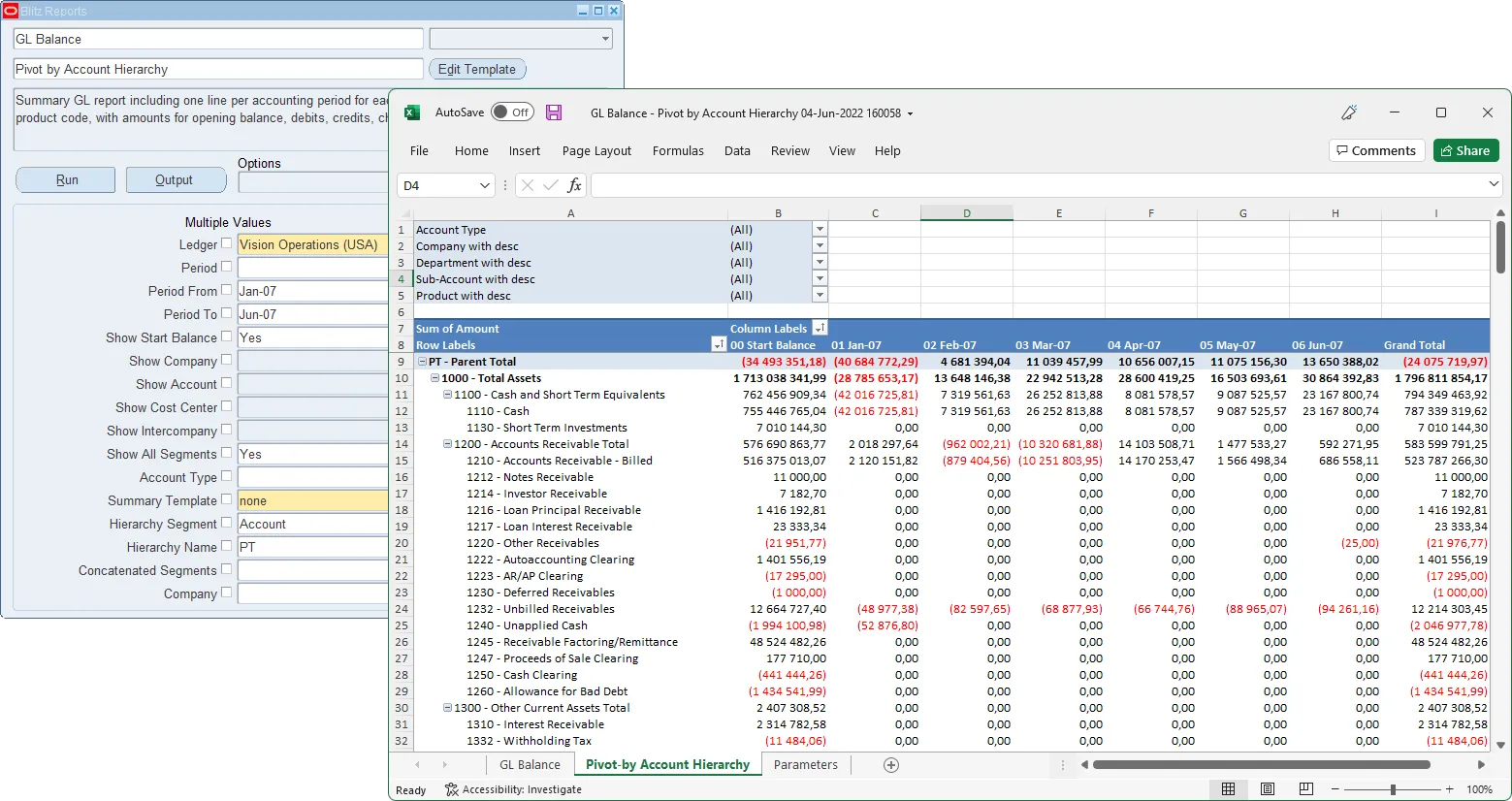
The Filters, Columns, Rows and Values fields are used to create and deliver the data in pivot table format with full drill down to details.
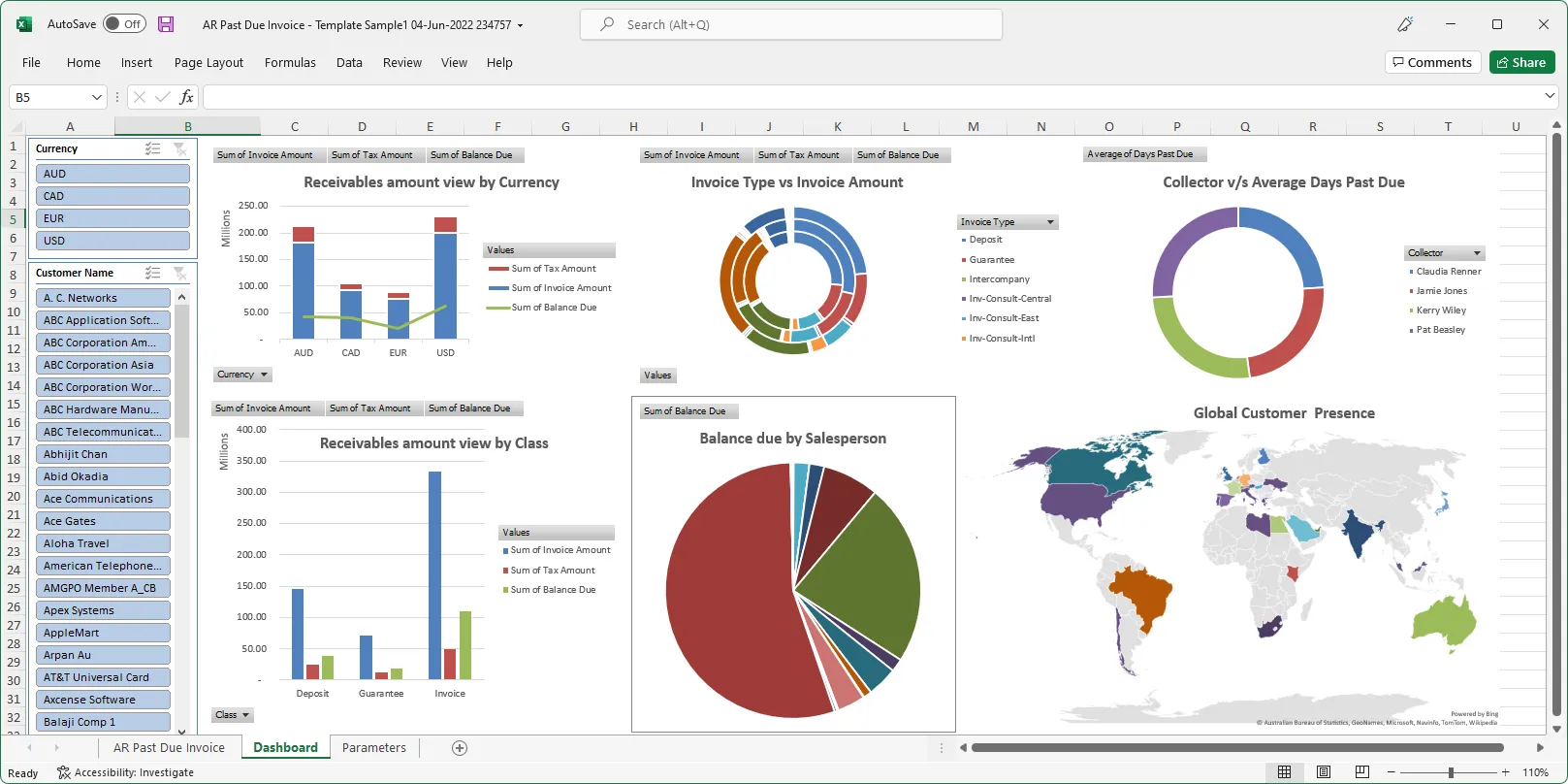
The Excel template upload functionality in Blitz Report allows users to create their own layouts by uploading an Excel template with additional sheets and charts, automatically refreshed when the report runs again. This allows to create custom dashboards and more advanced visualizations of report data.
You can download and use Blitz Report free of charge for your first 30 reports.
The installation and implementation process usually takes less than 1 hour; you can refer to our installation and user guides for specific details.
If you would like to optimize your Oracle EBS implementation and or operational reporting you can visit www.enginatics.com to review great ideas and example usage in blog. Or why not try for yourself in our demo environment.
Useful Links
Blitz Report™ – World’s fastest data upload and reporting for Oracle EBS
Oracle Discoverer replacement – importing worksheets into Blitz Report™
Blitz Report™ Questions & Answers
Supply Chain Hub by Blitz Report™
© 2025 Enginatics