PA Project Transaction Upload
Description:
PA Project Transaction Upload =================== This upload can be used to upload transactions from external cost collection systems into Oracle Projects. Transaction Import creates pre-approved expenditure items from transaction data entered in external cost collection systems.
If the ‘Operating Unit’ and/or ‘Transaction Source’ parameters are specified, then the upload excel will be restricted to the specified Operating Unit and/or Transaction Source.
If the ‘Batch Name’ parameter is specified, this will default as the Batch Name in the upload Excel.
If the ‘All Negative Expend Unmatched’ parameter is set to Yes, then all negative transations then the ‘Unmatched Negative Txn Flag’ column will automatically default to Yes against any negative transactions entered into upload Excel.
If the ‘Reverse in Future Period’ parameter is set to Yes, then the ‘Accrual Flag’ column will default to Yes against every transaction entered in the upload Excel
Parameters
Operating Unit, Transaction Source, Batch Name, Expenditure Ending Date, All Negative Expend Unmatched, Reverse in Future Period, Import Transactions
Used tables
pa_transaction_sources, gl_code_combinations_kfv, pa_transaction_interface_all, hr_all_organization_units_vl
Categories
Dependencies
If you would like to try one of these Oracle EBS SQLs without having Blitz Report installed, note that some of the reports require functions from utility package xxen_util.
Example Report
Report SQL
www.enginatics.com/reports/pa-project-transaction-upload/
Blitz Report™ import options
PA_Project_Transaction_Upload.xml
Case Study & Technical Analysis: PA Project Transaction Upload
Executive Summary
The PA Project Transaction Upload is a critical data integration tool that facilitates the import of project cost transactions from external systems into Oracle Projects. It provides a standardized, Excel-based template to load various types of expenditures, such as labor hours, material issues, or third-party charges, directly into the Projects module. This tool is essential for organizations that rely on external cost-collection systems and need an efficient and reliable way to ensure that their Oracle Projects system reflects a complete and timely view of all project actuals.
Business Challenge
For many organizations, project costs originate in a variety of specialized systems outside of Oracle EBS, such as external timecard systems, equipment logs, or subcontractor billing platforms. The primary challenge is integrating this external data into Oracle Projects accurately and efficiently.
- Complex Interface Development: Building and maintaining custom interfaces to load transaction data into Oracle Projects is a costly and time-consuming technical endeavor, often requiring specialized development resources.
- Delayed Project Costing and Billing: Without a streamlined import process, there are often significant delays between when a cost is incurred and when it appears in Oracle Projects. This leads to outdated project status reports for managers and delays in customer billing for time-and-materials projects.
- Data Validation and Error Handling: Data from external systems can often have formatting or content issues. A robust import process must be able to validate incoming data and provide clear error reporting for transactions that fail, which can be difficult to manage with custom solutions.
- Lack of User Control: Traditional, developer-built interfaces are often “black boxes” to the finance and project accounting users, giving them little control over the loading, batching, and error correction processes.
The Solution
This upload tool provides a flexible, user-driven solution for importing project transactions, replacing the need for custom development with a standardized and controlled process.
- Standardized Excel-based Integration: The tool uses a simple, pre-formatted Excel template as the medium for the import. This allows users in the finance or project teams to format and load the data themselves, without needing IT intervention.
- Accelerated Cost Processing: By enabling bulk uploads of transactions, the tool dramatically reduces the lead time for getting external costs into Oracle Projects. This ensures that project managers have up-to-date actuals for decision-making and that billing is not delayed.
- Leverages Oracle’s Standard Import Process: The tool loads data into Oracle’s official transaction interface table and then utilizes the standard “Transaction Import” program. This means all of Oracle’s own robust validation logic is applied, ensuring data integrity and providing clear, standard error reports for failed transactions.
- Improved Control and Reconciliation: Features like
Transaction SourceandBatch Nameallow users to group imported transactions into logical batches, which greatly simplifies the process of reconciling the imported data with the source system’s reports.
Technical Architecture (High Level)
The tool serves as a user-friendly front-end to the standard, Oracle-supported Transaction Import process.
- Primary Tables Involved:
pa_transaction_interface_all(the central interface table where the transaction data is loaded from the Excel file).pa_transaction_sources(a setup table that defines the allowed sources for imported transactions).- After the upload, the “PRC: Transaction Import” process moves validated data into the core project costing tables, primarily
pa_expenditure_items_allandpa_cost_distribution_lines_all.
- Logical Relationships: The tool populates the
pa_transaction_interface_alltable. The user then runs the standard Oracle “PRC: Transaction Import” concurrent program, which reads the interface table, validates each transaction against the project, task, expenditure type, and other rules, and, if successful, creates a permanent expenditure item in Oracle Projects.
Parameters & Filtering
The parameters provide control over the data preparation and import process:
- Transaction Source: A mandatory parameter that defines the external system the data is coming from (e.g., ‘Corporate Timecard System’). This is a key control and audit feature.
- Batch Name: Allows the user to assign a unique name to the group of transactions being loaded, which simplifies reconciliation and error handling.
- Expenditure Ending Date: Sets the default expenditure date for the transactions.
- Import Transactions: A key parameter that likely gives the user the option to automatically submit the “PRC: Transaction Import” program after the data has been successfully loaded into the interface table.
Performance & Optimization
The process is designed for high-volume data integration.
- Bulk Interface Loading: Loading data into an interface table is a standard, highly scalable, and performant method for integrating bulk data into Oracle E-Business Suite.
- Efficient Background Processing: The subsequent “Transaction Import” concurrent program is a highly optimized, set-based program designed by Oracle to process thousands of transactions efficiently as a background process.
FAQ
1. What is a ‘Transaction Source’ and why is it important? A ‘Transaction Source’ is a mandatory setup in Oracle Projects that defines a name for every external system that is allowed to send transactions into PA. It is a critical audit and control feature that allows you to track the origin of every cost and to apply different processing rules for different sources.
2. What happens to transactions that fail the import process? When the “PRC: Transaction Import” program runs, any transaction in the interface table that fails validation will be flagged as an error and left in the interface table. Users can then run the standard Oracle report “Transaction Import Rejection Report” to see the specific reason for failure (e.g., ‘Invalid Project Number’), correct the data in the source file, and re-upload.
3. Can this tool be used to import both raw costs and burdened costs? The standard Transaction Import process is primarily designed to import raw costs (e.g., hours and raw labor rate). The process of applying overheads and other indirect costs (burdening) is typically handled by a subsequent, separate process within Oracle Projects after the raw costs have been successfully imported.
Oracle E-Business Suite Reporting Library
We provide an open source Oracle EBS SQLs as a part of operational and project implementation support toolkits for rapid Excel reports generation.
Blitz Report™ is based on Oracle EBS forms technology, and hence requires minimal training. There are no data or performance limitations since the output files are created directly from the database without going through intermediate file formats such as XML.
Blitz Report can be used as BI Publisher and Oracle Discoverer replacement tool. Standard Oracle BI Publisher and Discoverer reports can also be imported into Blitz Report for immediate output to Excel. Typically, reports can be created and version tracked within hours instead of days. The concurrent request output automatically opens upon completion without the need for re-formatting.
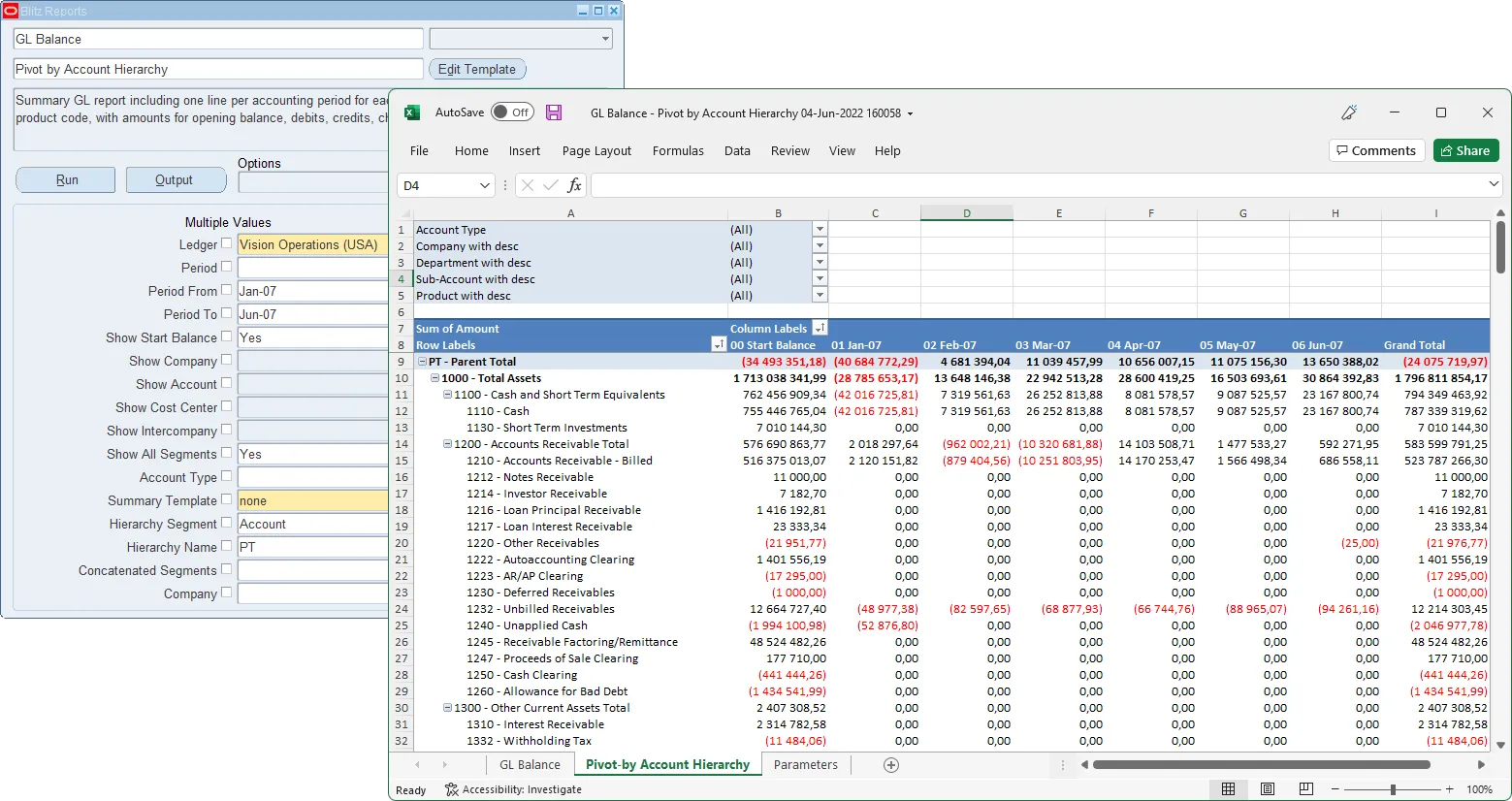
The Filters, Columns, Rows and Values fields are used to create and deliver the data in pivot table format with full drill down to details.
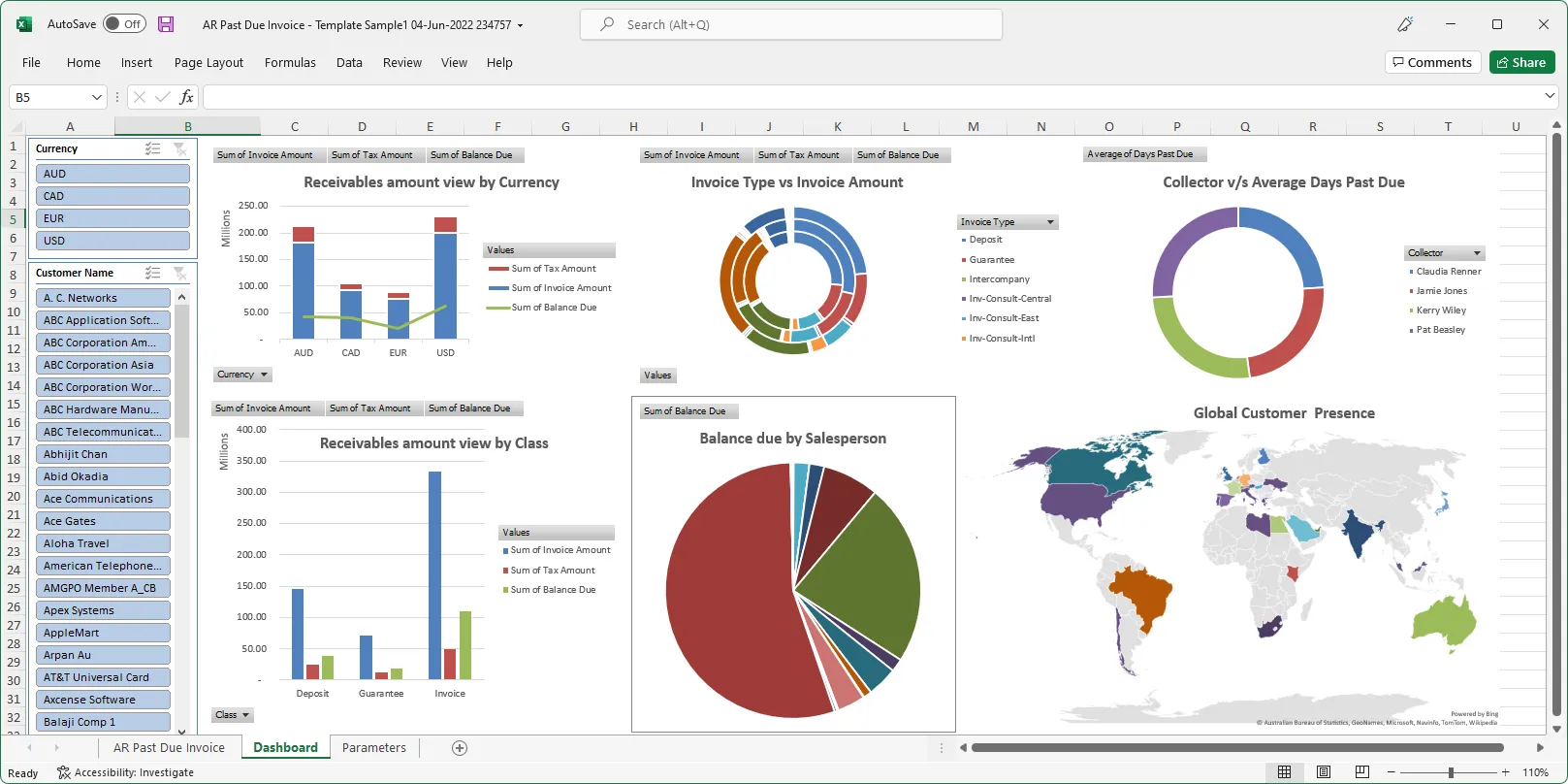
The Excel template upload functionality in Blitz Report allows users to create their own layouts by uploading an Excel template with additional sheets and charts, automatically refreshed when the report runs again. This allows to create custom dashboards and more advanced visualizations of report data.
You can download and use Blitz Report free of charge for your first 30 reports.
The installation and implementation process usually takes less than 1 hour; you can refer to our installation and user guides for specific details.
If you would like to optimize your Oracle EBS implementation and or operational reporting you can visit www.enginatics.com to review great ideas and example usage in blog. Or why not try for yourself in our demo environment.
Useful Links
Blitz Report™ – World’s fastest data upload and reporting for Oracle EBS
Oracle Discoverer replacement – importing worksheets into Blitz Report™
Blitz Report™ Questions & Answers
Supply Chain Hub by Blitz Report™
© 2025 Enginatics