PO Internal Requisitions and Sales Orders
Description:
Report to display internal sales orders and requisition numbers, with aging dates and other useful information.
Parameters
Requisition Creation Date From, Requisition Creation Date To, Item Number, Organization Code, Organization Type, Operating Unit, Ledger, Open, Category Set 1, Category Set 2, Category Set 3
Used tables
mtl_interorg_ship_methods, rcv_transactions, po_requisition_lines_all, po_requisition_headers_all, mtl_parameters, oe_order_lines_all, oe_order_headers_all, oe_transaction_types_tl, org_organization_definitions, hr_all_organization_units_vl, gl_ledgers, mtl_system_items_vl, mtl_item_status_vl, mtl_units_of_measure_vl, cst_item_costs, hz_cust_accounts, hz_parties, hz_cust_site_uses_all, hz_cust_acct_sites_all, hz_party_sites, hz_locations, org_access_view
Categories
Related reports
Dependencies
If you would like to try one of these Oracle EBS SQLs without having Blitz Report installed, note that some of the reports require functions from utility package xxen_util.
Example Report
PO Internal Requisitions and Sales Orders 01-Oct-2025 030155.xlsx
Report SQL
www.enginatics.com/reports/po-internal-requisitions-and-sales-orders/
Blitz Report™ import options
PO_Internal_Requisitions_and_Sales_Orders.xml
Case Study & Technical Analysis: PO Internal Requisitions and Sales Orders Report
Executive Summary
The PO Internal Requisitions and Sales Orders report is a crucial intercompany and internal supply chain visibility tool within Oracle E-Business Suite. It provides a consolidated view of internal requisitions (demand from one internal organization) and their corresponding internal sales orders (supply from another internal organization). This report is indispensable for procurement, inventory, and order management teams to track the entire internal order fulfillment cycle, monitor aging requests, identify bottlenecks, and ensure the seamless transfer of goods and services between internal entities.
Business Challenge
Many large organizations operate with multiple internal operating units or inventory organizations that frequently transact with each other. Managing this internal demand and supply chain can be as complex as external procurement. Key challenges include:
- Lack of End-to-End Visibility: It’s difficult to get a single, consolidated view that links an internal requisition to its corresponding internal sales order, shipment, and receipt. This fragmentation hinders efficient internal order fulfillment.
- Tracking Aging Requests: Internal requisitions can become stagnant, leading to delays in internal supply. Proactively identifying and expediting these aging requests is challenging without a dedicated report.
- Bottlenecks in Internal Transfers: Pinpointing where delays occur in the internal order cycle (e.g., requisition stuck, sales order unbooked, awaiting shipment) impacts internal customer satisfaction and operational efficiency.
- Reconciliation Between Modules: Reconciling data between Purchasing (for requisitions), Order Management (for internal sales orders), and Inventory (for shipments/receipts) is a critical but often complex task.
The Solution
This report offers a flexible, consolidated, and actionable solution for managing the entire internal procure-to-pay cycle, directly addressing the challenges of fragmented visibility and reconciliation.
- Unified Internal Order View: It integrates internal requisition header and line details with corresponding internal sales order headers and lines, providing an end-to-end view of the internal demand and supply chain.
- Aging and Status Monitoring: The report displays aging dates and other useful information, allowing users to quickly identify internal requisitions or sales orders that are open or delayed, enabling proactive follow-up and expediting.
- Cross-Module Reconciliation: By linking data from Purchasing, Order Management, and Inventory, the report facilitates reconciliation between these modules, ensuring consistency and accuracy of internal transfer data.
- Enhanced Operational Efficiency: With clear visibility into the internal order lifecycle, teams can identify and resolve bottlenecks more quickly, improving internal customer service and overall operational efficiency.
Technical Architecture (High Level)
The report queries core Oracle Purchasing, Order Management, and Inventory tables to consolidate internal order data.
- Primary Tables Involved:
po_requisition_headers_allandpo_requisition_lines_all(for internal requisition details).oe_order_headers_allandoe_order_lines_all(for internal sales order details).mtl_parametersandorg_organization_definitions(for organizational context).gl_ledgers(for ledger context).mtl_system_items_vl(for item details).rcv_transactions(for receiving details of internal transfers).
- Logical Relationships: The report establishes a direct link between internal requisition lines and internal sales order lines (typically via
po_requisition_lines_all.requisition_line_idlinking tooe_order_lines_all.source_document_line_id). It then joins to header tables for both requisitions and sales orders, and to various inventory and organizational tables to provide comprehensive details and aging information.
Parameters & Filtering
The report offers an extensive set of parameters for precise filtering and analysis of internal orders:
- Requisition Creation Date From/To: Allows for analyzing internal demand created within specific periods.
- Item and Category Filters:
Item NumberandCategory Setparameters enable focused analysis on specific products or product groupings. - Organizational Context:
Organization Code,Organization Type,Operating Unit, andLedgerprovide comprehensive filtering across the enterprise. - Open Flag: The
Openparameter is crucial for focusing on active internal orders that are still in process and require attention.
Performance & Optimization
As a transactional report integrating data across multiple modules, it is optimized through strong filtering and efficient joining strategies.
- Date and Status-Driven Filtering: The
Requisition Creation Daterange and theOpenstatus parameter are critical for performance, allowing the database to efficiently narrow down the large transactional datasets to relevant open internal orders. - Indexed Joins: Queries leverage standard Oracle indexes on
requisition_header_id,requisition_line_id,order_header_id,order_line_id,organization_id, anditem_idfor efficient data retrieval across Purchasing, Order Management, and Inventory tables.
FAQ
1. What is an ‘Internal Requisition’ and how does it differ from a standard requisition? An ‘Internal Requisition’ is a request for goods or services that is fulfilled by another internal organization within the same company (e.g., a manufacturing plant requesting components from an internal distribution center). A standard requisition is a request for goods or services from an external supplier. Internal requisitions trigger internal sales orders, not external purchase orders.
2. How does this report help manage the ‘aging’ of internal orders?
By showing creation dates and indicating if an internal order is still Open, the report allows procurement and inventory teams to quickly identify internal requisitions or sales orders that have been pending for an extended period. This enables proactive follow-up to resolve any issues and keep the internal supply chain moving.
3. Can this report also show the actual shipment and receipt details for internal transfers?
Yes, the report includes the rcv_transactions table, which means it can be configured to display detailed information about the shipment (from the supplying organization) and receipt (at the demanding organization) of goods against the internal sales order, providing full visibility into the physical movement of inventory.
Oracle E-Business Suite Reporting Library
We provide an open source Oracle EBS SQLs as a part of operational and project implementation support toolkits for rapid Excel reports generation.
Blitz Report™ is based on Oracle EBS forms technology, and hence requires minimal training. There are no data or performance limitations since the output files are created directly from the database without going through intermediate file formats such as XML.
Blitz Report can be used as BI Publisher and Oracle Discoverer replacement tool. Standard Oracle BI Publisher and Discoverer reports can also be imported into Blitz Report for immediate output to Excel. Typically, reports can be created and version tracked within hours instead of days. The concurrent request output automatically opens upon completion without the need for re-formatting.
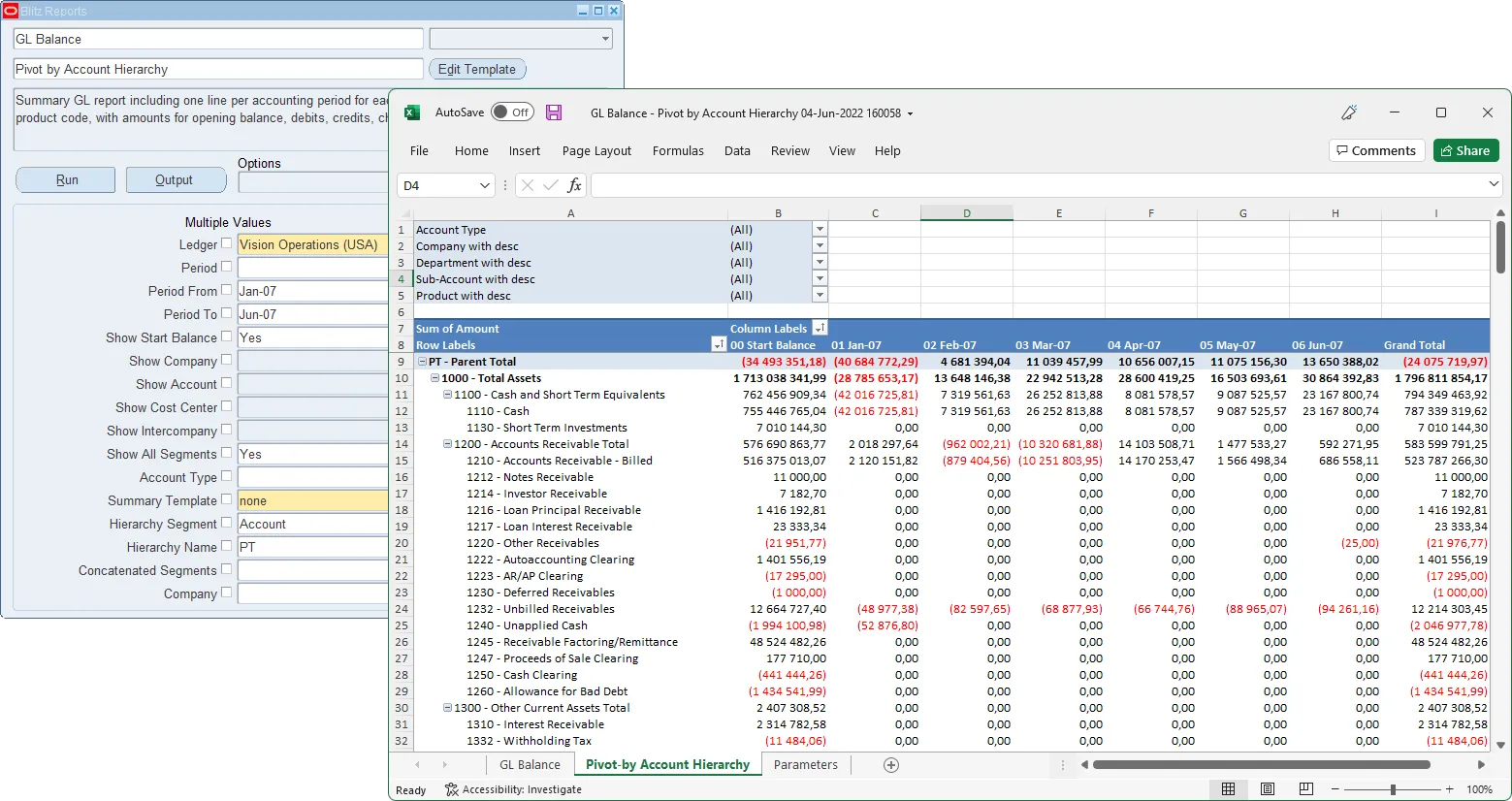
The Filters, Columns, Rows and Values fields are used to create and deliver the data in pivot table format with full drill down to details.
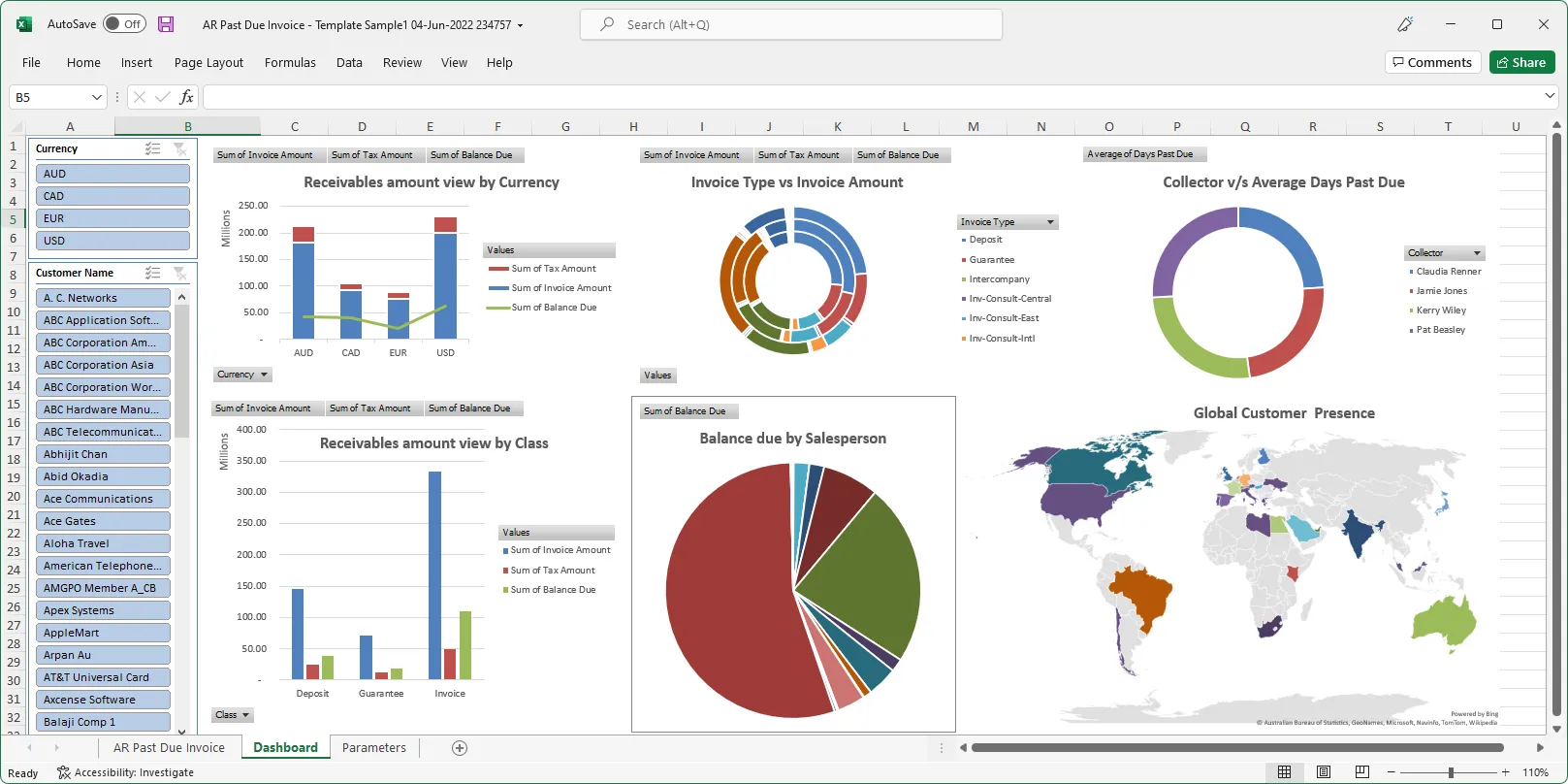
The Excel template upload functionality in Blitz Report allows users to create their own layouts by uploading an Excel template with additional sheets and charts, automatically refreshed when the report runs again. This allows to create custom dashboards and more advanced visualizations of report data.
You can download and use Blitz Report free of charge for your first 30 reports.
The installation and implementation process usually takes less than 1 hour; you can refer to our installation and user guides for specific details.
If you would like to optimize your Oracle EBS implementation and or operational reporting you can visit www.enginatics.com to review great ideas and example usage in blog. Or why not try for yourself in our demo environment.
Useful Links
Blitz Report™ – World’s fastest data upload and reporting for Oracle EBS
Oracle Discoverer replacement – importing worksheets into Blitz Report™
Blitz Report™ Questions & Answers
Supply Chain Hub by Blitz Report™
© 2025 Enginatics