QP Pricing Attribute Definitions
Description:
Lists the Pricing and Qualifiers Attributes defined for use by Advanced Pricing
Parameters
Used tables
Categories
Related reports
QP Customer Pricing Engine Request
Dependencies
If you would like to try one of these Oracle EBS SQLs without having Blitz Report installed, note that some of the reports require functions from utility package xxen_util.
Example Report
Report SQL
www.enginatics.com/reports/qp-pricing-attribute-definitions/
Blitz Report™ import options
QP_Pricing_Attribute_Definitions.xml
Case Study & Technical Analysis: QP Pricing Attribute Definitions Report
Executive Summary
The QP Pricing Attribute Definitions report is a crucial configuration and audit tool for Oracle Advanced Pricing (QP). It provides a comprehensive listing of all defined pricing and qualifier attributes that are used by the Oracle Pricing Engine to determine item selling prices, discounts, and promotions. This report is indispensable for pricing analysts, system configurators, and auditors to understand the foundational elements of their pricing strategy, audit attribute setups, troubleshoot pricing discrepancies, and ensure accurate and consistent application of all pricing rules.
Business Challenge
Oracle Advanced Pricing’s flexibility stems from its ability to use various attributes (e.g., Customer Class, Item Category, Order Type) as conditions for applying prices and modifiers. However, managing and understanding these attribute definitions can be a significant challenge:
- Opaque Attribute Definitions: It’s often difficult to get a single, consolidated view of all the attributes defined for use by the pricing engine, including their source (e.g., from an order header, item master, or customer profile) and their internal vs. display values.
- Configuration Complexity: Defining and maintaining pricing and qualifier attributes involves multiple setup steps. Errors in these definitions can lead to modifiers not applying correctly or price lists not being selected as intended.
- Troubleshooting Pricing Errors: When the pricing engine does not behave as expected, the root cause is frequently a misconfigured pricing or qualifier attribute. Diagnosing these issues requires precise information on the active attribute definitions.
- Compliance and Audit: Ensuring that pricing rules are based on valid and correctly configured attributes is essential for financial compliance and internal audits. Clear documentation of these definitions is a key requirement.
The Solution
This report offers a consolidated, detailed, and easily auditable solution for analyzing and auditing pricing attribute definitions, bringing transparency to the core of the pricing engine.
- Comprehensive Attribute Overview: It presents a detailed list of all defined pricing and qualifier attributes, including their internal names, user-friendly descriptions, source entities, and value sets. This provides a clear, at-a-glance understanding of how attributes are configured.
- Simplified Configuration Audit: Pricing analysts and auditors can use this report to quickly review and verify attribute setups, ensuring they are correctly defined and align with the intended pricing strategy.
- Accelerated Troubleshooting: When a pricing issue arises, this report provides immediate insight into the active attribute definitions, helping to quickly pinpoint and resolve misconfigurations that cause pricing discrepancies.
- Enhanced Documentation: By providing transparent documentation of pricing attribute setups, the report strengthens pricing governance and makes it easier to demonstrate compliance during internal and external audits.
Technical Architecture (High Level)
Given the README.md references xmltable and mtl_parameters, the report likely draws information from complex system setups, potentially involving XML-based configurations and internal Advanced Pricing definitions.
- Primary Tables/Components Involved:
- Underlying Oracle Advanced Pricing setup tables that define pricing contexts and attributes (e.g.,
QP_PRC_CONTEXTS_B,QP_SEGMENTS_B,QP_SEGMENT_MAPPINGS). mtl_parameters(potentially used for organizational context or default settings influencing attributes).xmltable(suggests that some attribute definitions might be stored or processed using XML structures within the database, which is common for complex configurations).
- Underlying Oracle Advanced Pricing setup tables that define pricing contexts and attributes (e.g.,
- Logical Relationships: The report implicitly (through the use of
xmltableand package logic) extracts definitions of pricing and qualifier attributes. These attributes are often linked to specific pricing contexts (e.g., Order Header, Order Line) and describe how data from various Oracle EBS tables or system parameters can be used as conditions or values in pricing rules.
Parameters & Filtering
No Explicit Parameters: The README.md indicates no specific parameters for this report. This implies that, by design, it provides a comprehensive dump of all configured pricing and qualifier attribute definitions within the system. This can be advantageous for a full, unfiltered audit of the pricing infrastructure.
Performance & Optimization
As a configuration report, it is optimized for efficient retrieval of setup data.
- Low Data Volume: The underlying attribute definition tables typically contain a manageable number of rows compared to transactional data, ensuring quick query execution.
- Direct Configuration Access: The report directly accesses the core setup definitions within Oracle Advanced Pricing, minimizing complex joins to transactional data.
- XML Processing (if applicable): While
xmltablecan be performance-intensive for very large XML documents, for configuration data, it is typically efficient in parsing and extracting attribute definitions.
FAQ
1. What is the difference between a ‘Pricing Attribute’ and a ‘Qualifier Attribute’? A ‘Pricing Attribute’ is a piece of information (e.g., Item Number, Customer Name) that is used in a pricing formula or to determine a base price. A ‘Qualifier Attribute’ is a piece of information that determines whether a specific price list or modifier is applicable to a transaction (e.g., if ‘Customer Class = Wholesale’, then apply a discount). Both are crucial for pricing logic.
2. How do these attribute definitions relate to the Oracle Pricing Engine? These definitions are the building blocks for the Oracle Pricing Engine. The engine uses these defined attributes to evaluate the conditions (qualifiers) on price lists and modifiers, and to apply pricing formulas, ultimately deriving the final selling price for a transaction. Correct attribute definitions are vital for the engine’s accuracy.
3. Since there are no parameters, how can I find a specific attribute? You would run the report to get the full list and then use standard spreadsheet filtering (e.g., in Excel) to search for specific attribute names or codes. This provides a complete reference guide to all configured pricing elements.
Oracle E-Business Suite Reporting Library
We provide an open source Oracle EBS SQLs as a part of operational and project implementation support toolkits for rapid Excel reports generation.
Blitz Report™ is based on Oracle EBS forms technology, and hence requires minimal training. There are no data or performance limitations since the output files are created directly from the database without going through intermediate file formats such as XML.
Blitz Report can be used as BI Publisher and Oracle Discoverer replacement tool. Standard Oracle BI Publisher and Discoverer reports can also be imported into Blitz Report for immediate output to Excel. Typically, reports can be created and version tracked within hours instead of days. The concurrent request output automatically opens upon completion without the need for re-formatting.
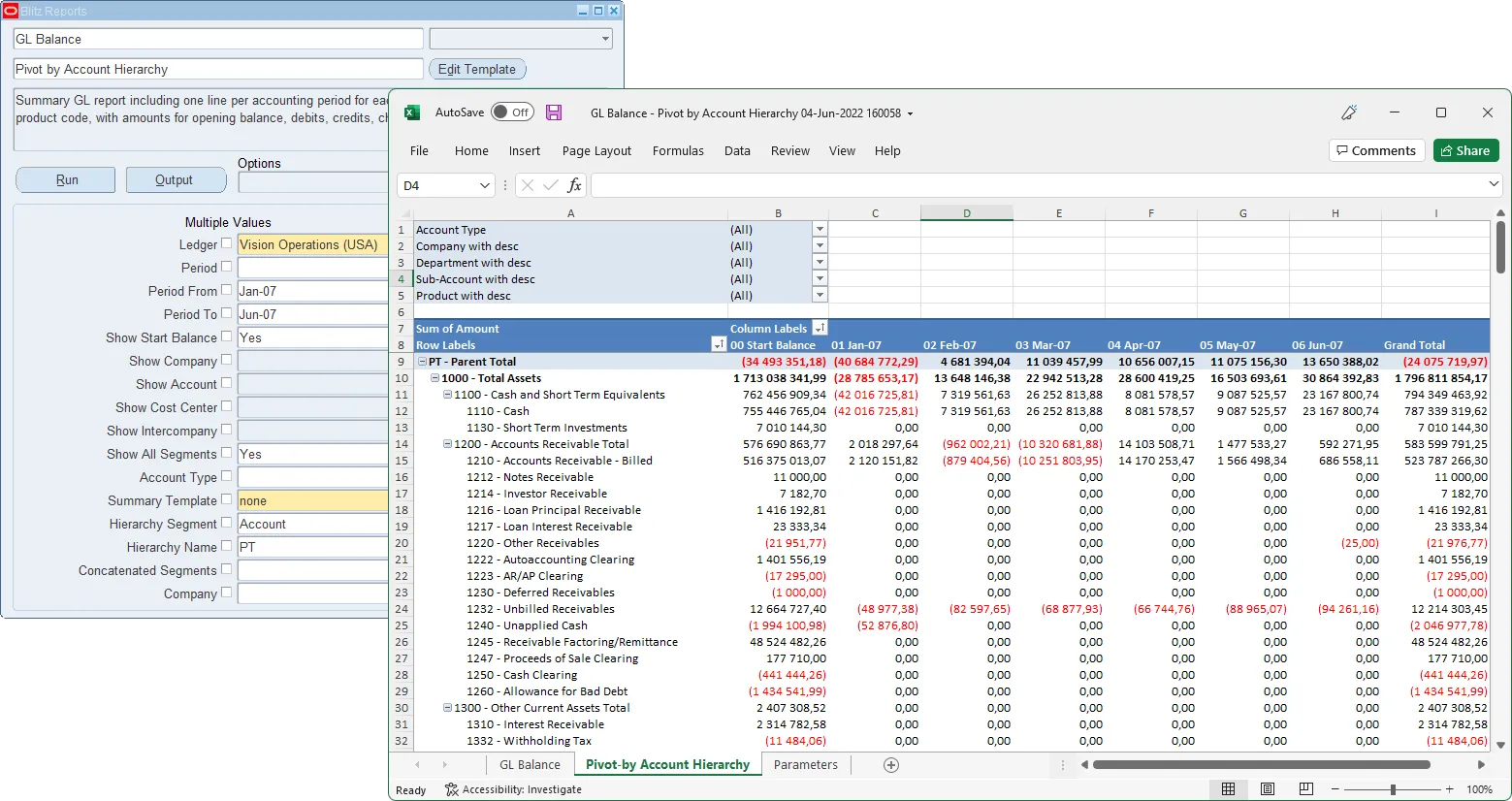
The Filters, Columns, Rows and Values fields are used to create and deliver the data in pivot table format with full drill down to details.
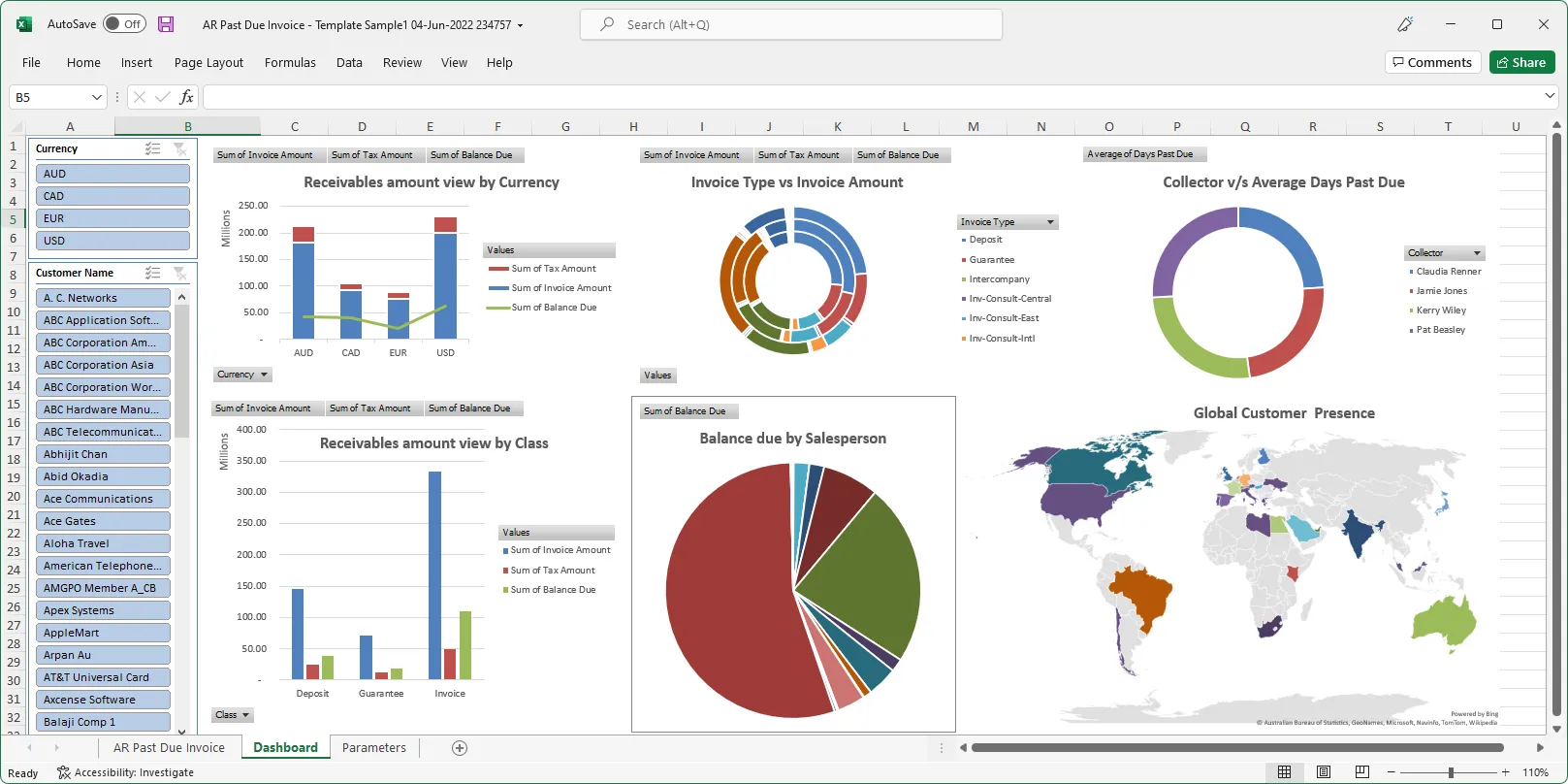
The Excel template upload functionality in Blitz Report allows users to create their own layouts by uploading an Excel template with additional sheets and charts, automatically refreshed when the report runs again. This allows to create custom dashboards and more advanced visualizations of report data.
You can download and use Blitz Report free of charge for your first 30 reports.
The installation and implementation process usually takes less than 1 hour; you can refer to our installation and user guides for specific details.
If you would like to optimize your Oracle EBS implementation and or operational reporting you can visit www.enginatics.com to review great ideas and example usage in blog. Or why not try for yourself in our demo environment.
Useful Links
Blitz Report™ – World’s fastest data upload and reporting for Oracle EBS
Oracle Discoverer replacement – importing worksheets into Blitz Report™
Blitz Report™ Questions & Answers
Supply Chain Hub by Blitz Report™
© 2025 Enginatics