WF Business Events and Subscriptions
Description:
Workflow business event and subscription details
Parameters
Event Name, Subscription Function
Used tables
wf_events_vl, wf_event_subscriptions, wf_systems, wf_agents
Categories
Dependencies
If you would like to try one of these Oracle EBS SQLs without having Blitz Report installed, note that some of the reports require functions from utility package xxen_util.
Example Report
WF Business Events and Subscriptions 18-Jan-2018 224755.xlsx
Report SQL
www.enginatics.com/reports/wf-business-events-and-subscriptions/
Blitz Report™ import options
WF_Business_Events_and_Subscriptions.xml
Case Study & Technical Analysis: WF Business Events and Subscriptions Report
Executive Summary
The WF Business Events and Subscriptions report is a crucial configuration and audit tool for Oracle Workflow, specifically focusing on the Business Event System (BES). It provides a comprehensive listing of all defined business events and their associated subscriptions, detailing what happens when a particular event occurs in Oracle E-Business Suite. This report is indispensable for system administrators, integration specialists, and functional consultants to understand event-driven architectures, audit custom configurations, troubleshoot integration issues, and ensure the smooth flow of information and processes across different Oracle modules and external systems.
Business Challenge
Oracle’s Business Event System (BES) is a powerful mechanism for decoupling system components and enabling event-driven integrations. However, managing and understanding the intricate network of events and their subscriptions can be a significant challenge:
- Opaque Event-Driven Logic: It’s often difficult to get a single, consolidated view of all business events and, more importantly, all the actions (subscriptions) that are triggered when an event occurs. This lack of transparency complicates system understanding and impact analysis.
- Configuration Complexity: Subscriptions can involve various types of actions (e.g., executing a workflow, calling a custom function, sending a message) and complex filtering rules. Manually auditing these configurations across numerous events is a tedious, multi-step process.
- Troubleshooting Integration Failures: When an integration fails or a workflow does not initiate as expected, the root cause often lies in a misconfigured event subscription. Diagnosing these issues requires precise information on the active event rules.
- System Documentation and Audit: Maintaining accurate documentation of all business events and their subscriptions is essential for system maintenance, upgrades, and compliance audits, but is cumbersome to do manually.
The Solution
This report offers a consolidated, detailed, and easily auditable solution for analyzing and managing Oracle Business Event System configurations, bringing transparency to event-driven architectures.
- Comprehensive Event and Subscription Overview: It presents a detailed list of all business events and their associated subscriptions, including event names, descriptions, subscription functions, status, and any filtering rules. This provides a clear, at-a-glance understanding of event-driven logic.
- Simplified Configuration Audit: Integration specialists and auditors can use this report to quickly review and verify event and subscription setups, ensuring they are correctly configured and align with intended integration patterns and business rules.
- Accelerated Troubleshooting: When an integration or workflow issue arises from an event, this report provides immediate insight into the active subscriptions and their details, helping to quickly pinpoint and resolve misconfigurations that cause operational problems.
- Enhanced System Documentation: By providing transparent documentation of business events and their subscriptions, the report strengthens system governance and makes it easier to understand and maintain complex integrations.
Technical Architecture (High Level)
The report queries core Oracle Workflow tables that define business events and their subscriptions.
- Primary Tables Involved:
wf_events_vl(the central view for business event definitions, including names and descriptions).wf_event_subscriptions(the central table linking business events to the actions (subscriptions) they trigger).wf_systemsandwf_agents(for details on the local and external systems/agents involved in event processing).
- Logical Relationships: The report selects event definitions from
wf_events_vl. For each event, it then joins towf_event_subscriptionsto retrieve all associated subscriptions. This linkage provides a complete picture of how each business event is configured to trigger downstream actions, including the details of the function or workflow that is executed by the subscription.
Parameters & Filtering
The report offers flexible parameters for targeted analysis of business events and subscriptions:
- Event Name: Allows users to focus on subscriptions related to a specific business event (e.g., ‘oracle.apps.po.event.req.approve’).
- Subscription Function: Enables users to search for subscriptions that invoke a particular custom function or workflow, which is useful when debugging or auditing specific integration points.
Performance & Optimization
As a configuration report, it is optimized for efficient retrieval of setup data.
- Low Data Volume: The underlying event and subscription definition tables (
wf_events_vl,wf_event_subscriptions) contain configuration data, which is typically a much smaller volume than transactional data, ensuring fast query execution. - Indexed Lookups: The queries leverage standard Oracle indexes on
event_nameandsubscription_guidfor efficient data retrieval.
FAQ
1. What is a ‘Business Event’ in Oracle Workflow? A ‘Business Event’ is a significant occurrence in Oracle EBS or an integrated application (e.g., “Purchase Order Approved,” “Invoice Validated,” “Employee Hired”). The Business Event System allows other applications or custom code to “subscribe” to these events and react to them without needing to modify the core application logic that raises the event.
2. How does a ‘Subscription’ work? A ‘Subscription’ defines an action that the Business Event System should perform when a specific business event is raised. This action could be: launching a workflow, executing a custom PL/SQL function, sending a message to a messaging queue, or calling a Java function. Subscriptions can also have rules or conditions (filter criteria) that determine if the action should be performed.
3. Can this report help debug why a custom workflow is not being triggered by an event?
Yes. By filtering for the relevant Event Name, you can examine all associated subscriptions. You would look for the subscription that is supposed to trigger your custom workflow and verify its status (Enabled), the Subscription Function, and any Filter Criteria that might be preventing it from activating correctly.
Oracle E-Business Suite Reporting Library
We provide an open source Oracle EBS SQLs as a part of operational and project implementation support toolkits for rapid Excel reports generation.
Blitz Report™ is based on Oracle EBS forms technology, and hence requires minimal training. There are no data or performance limitations since the output files are created directly from the database without going through intermediate file formats such as XML.
Blitz Report can be used as BI Publisher and Oracle Discoverer replacement tool. Standard Oracle BI Publisher and Discoverer reports can also be imported into Blitz Report for immediate output to Excel. Typically, reports can be created and version tracked within hours instead of days. The concurrent request output automatically opens upon completion without the need for re-formatting.
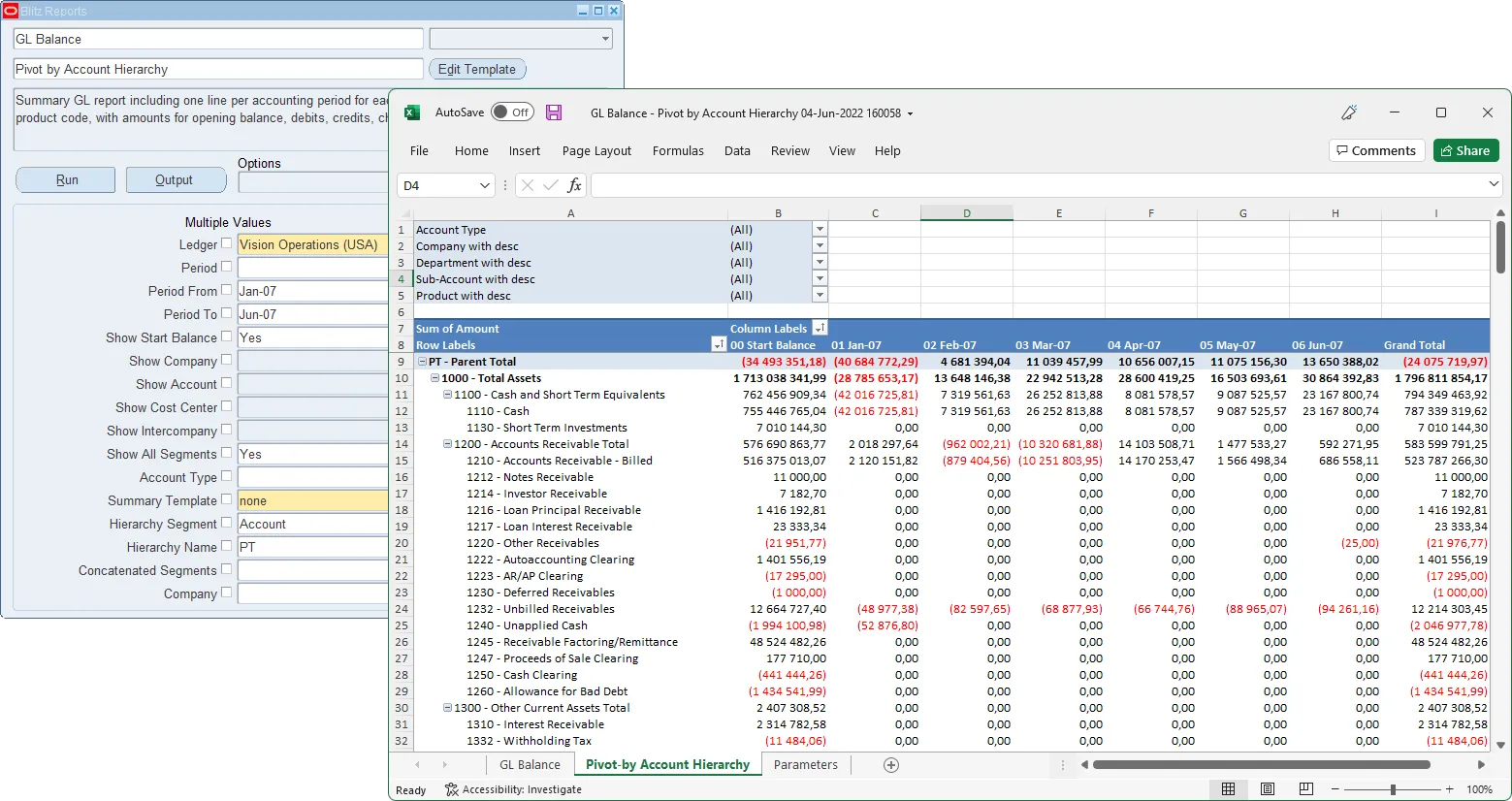
The Filters, Columns, Rows and Values fields are used to create and deliver the data in pivot table format with full drill down to details.
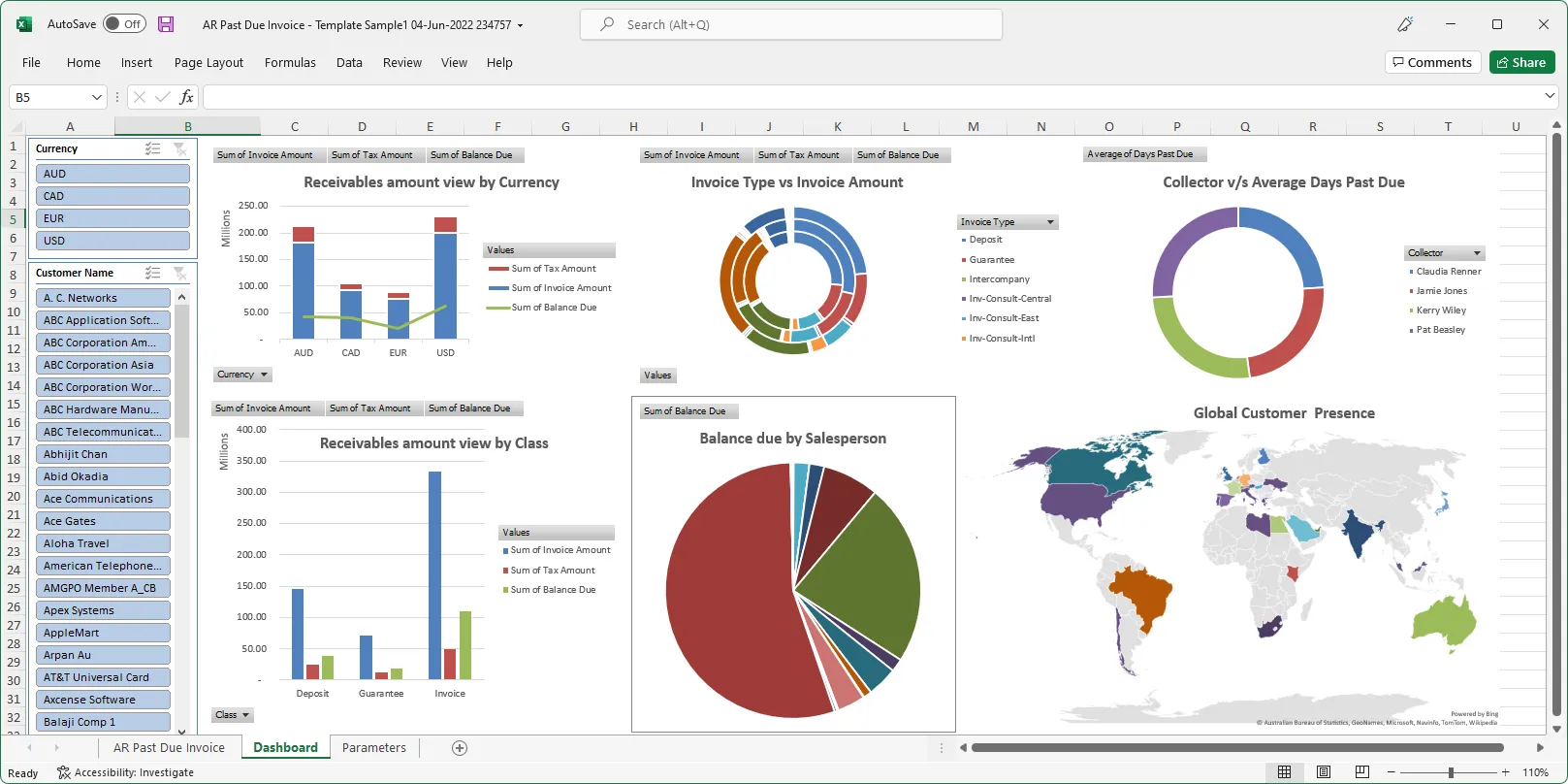
The Excel template upload functionality in Blitz Report allows users to create their own layouts by uploading an Excel template with additional sheets and charts, automatically refreshed when the report runs again. This allows to create custom dashboards and more advanced visualizations of report data.
You can download and use Blitz Report free of charge for your first 30 reports.
The installation and implementation process usually takes less than 1 hour; you can refer to our installation and user guides for specific details.
If you would like to optimize your Oracle EBS implementation and or operational reporting you can visit www.enginatics.com to review great ideas and example usage in blog. Or why not try for yourself in our demo environment.
Useful Links
Blitz Report™ – World’s fastest data upload and reporting for Oracle EBS
Oracle Discoverer replacement – importing worksheets into Blitz Report™
Blitz Report™ Questions & Answers
Supply Chain Hub by Blitz Report™
© 2025 Enginatics