INV Material Status Change History
Description:
Imported from BI Publisher Description: Material Status Change History Report Application: Inventory Source: Material Status Change History Report (XML) Short Name: INVMSCHR_XML DB package: INV_INVMSCHR_XMLP_PKG
Parameters
Operating Unit, Organization Code, Subinventory Code, Locators From, Locators To, Item Lot Controlled, Lot Number, Item Serial Controlled, Serial Number, Date From, Date To
Used tables
hr_operating_units, org_organization_definitions, mtl_secondary_inventories, mtl_material_status_history, mfg_lookups, mtl_transaction_reasons, mtl_material_statuses_vl, per_all_people_f, fnd_user, operating_unit, mtl_item_locations_kfv, mtl_lot_numbers, mtl_system_items_kfv, mtl_serial_numbers
Categories
Related reports
CAC Calculate Average Item Costs, CAC ICP PII Material Account Detail, CAC Material Account Detail
Dependencies
If you would like to try one of these Oracle EBS SQLs without having Blitz Report installed, note that some of the reports require functions from utility package xxen_util.
Example Report
Report SQL
www.enginatics.com/reports/inv-material-status-change-history/
Blitz Report™ import options
INV_Material_Status_Change_History.xml
INV Material Status Change History - Case Study & Technical Analysis
Executive Summary
The INV Material Status Change History report is an audit log for the “Material Status” control feature. Material Status allows organizations to restrict transactions for specific lots, serials, or subinventories (e.g., placing a lot on “Quality Hold”). This report tracks who changed the status, when they changed it, and why, providing accountability for inventory availability.
Business Challenge
Controlling inventory availability is critical for quality and compliance. However, without an audit trail, organizations face risks:
- Unauthorized Release: A lot marked “Quarantine” is accidentally released to production. Who did it?
- Mystery Holds: Inventory sits in “Hold” status for months because the person who placed the hold forgot to release it.
- Compliance Gaps: Auditors need proof that the “Quarantine” process is being followed and that only authorized personnel are releasing stock.
Solution
The INV Material Status Change History report captures the full lifecycle of status changes. It serves as the “Black Box” recorder for inventory availability controls.
Key Features:
- User Attribution: Identifies the specific user who performed the status change.
- Reason Codes: Captures the business reason (e.g., “Failed Inspection”, “Customer Return”) for the change.
- Granularity: Tracks changes at the Subinventory, Locator, Lot, and Serial level.
Technical Architecture
The report queries the history table dedicated to status updates.
Key Tables and Views
MTL_MATERIAL_STATUS_HISTORY: The primary table storing the log of changes (Old Status, New Status, Update Date, Updated By).MTL_MATERIAL_STATUSES_VL: Defines the status codes (e.g., “Active”, “Hold”, “Reject”).MTL_SYSTEM_ITEMS_KFV: Item details.FND_USER: Resolves theCREATED_BYID to a username.
Core Logic
- History Retrieval: Selects records from
MTL_MATERIAL_STATUS_HISTORYbased on the date range and item criteria. - Entity Resolution: Determines if the change applied to a Subinventory, Locator, Lot, or Serial Number based on the populated ID columns.
- Status Decoding: Joins to
MTL_MATERIAL_STATUSES_VLto show the readable names of the “From” and “To” statuses.
Business Impact
- Accountability: Discourages unauthorized changes to inventory status.
- Process Improvement: Helps identify bottlenecks (e.g., lots staying in “Inspection” status too long).
- Regulatory Compliance: Provides the necessary evidence for GMP (Good Manufacturing Practice) and ISO audits.
Oracle E-Business Suite Reporting Library
We provide an open source Oracle EBS SQLs as a part of operational and project implementation support toolkits for rapid Excel reports generation.
Blitz Report™ is based on Oracle EBS forms technology, and hence requires minimal training. There are no data or performance limitations since the output files are created directly from the database without going through intermediate file formats such as XML.
Blitz Report can be used as BI Publisher and Oracle Discoverer replacement tool. Standard Oracle BI Publisher and Discoverer reports can also be imported into Blitz Report for immediate output to Excel. Typically, reports can be created and version tracked within hours instead of days. The concurrent request output automatically opens upon completion without the need for re-formatting.
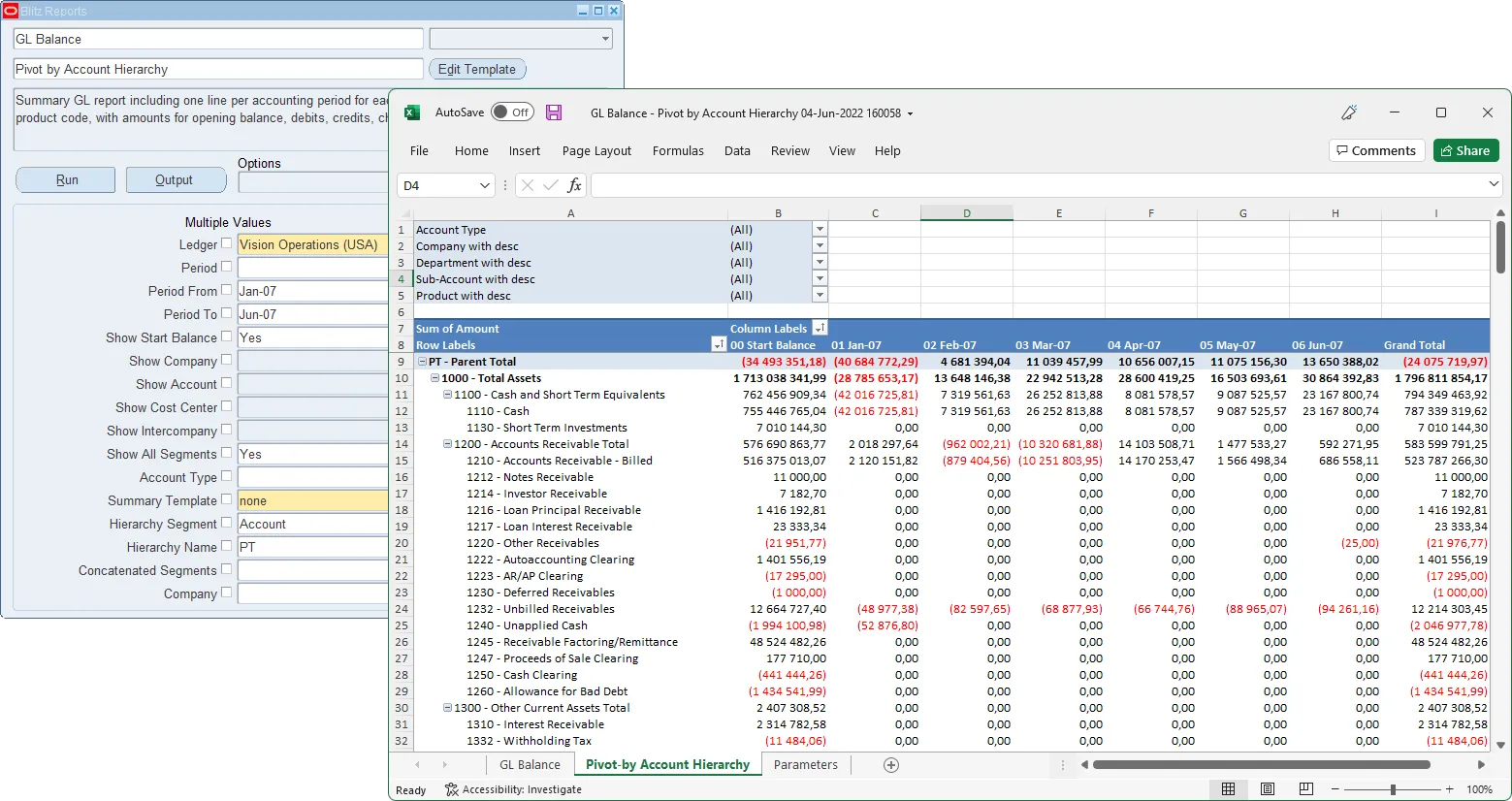
The Filters, Columns, Rows and Values fields are used to create and deliver the data in pivot table format with full drill down to details.
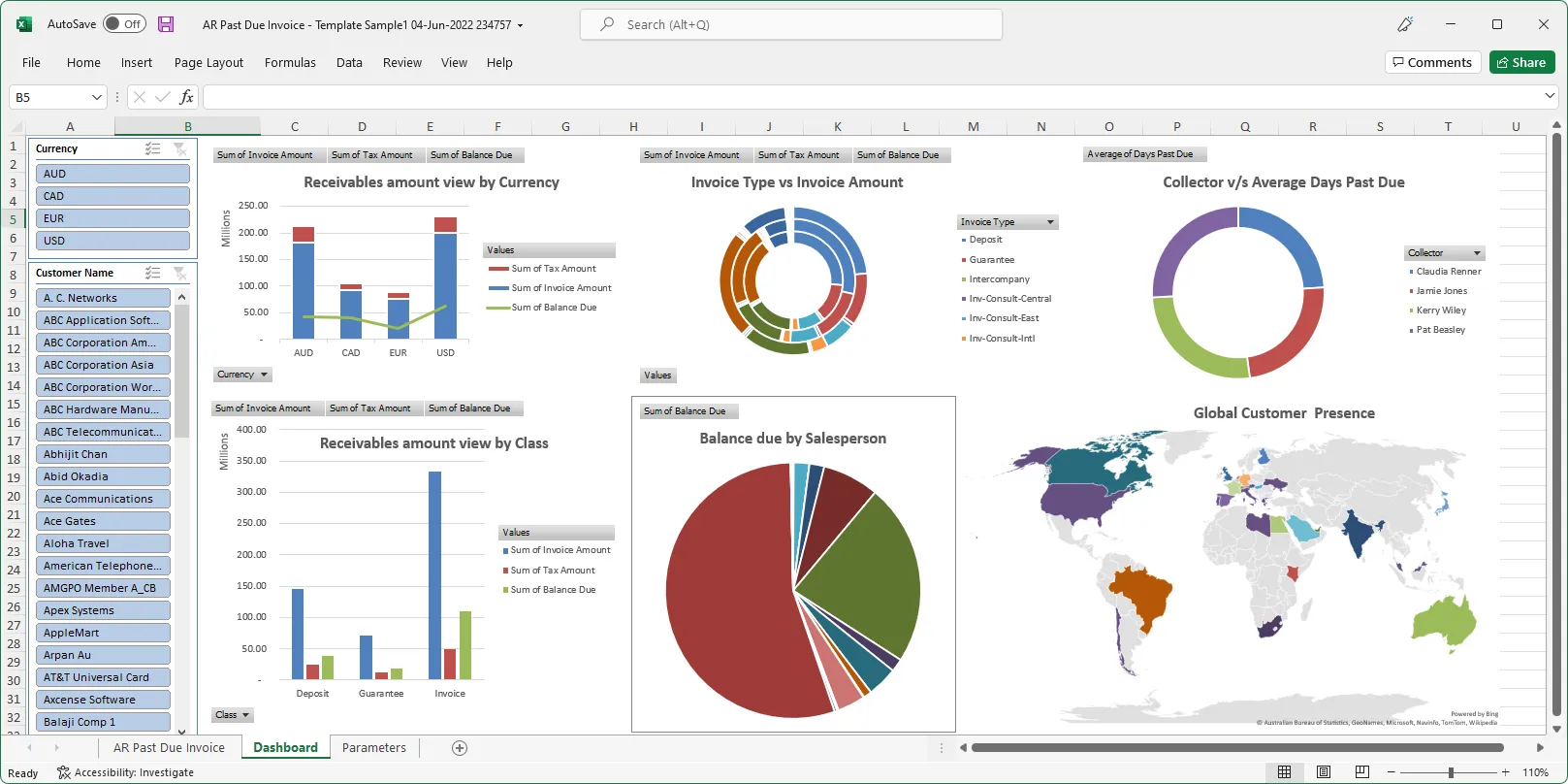
The Excel template upload functionality in Blitz Report allows users to create their own layouts by uploading an Excel template with additional sheets and charts, automatically refreshed when the report runs again. This allows to create custom dashboards and more advanced visualizations of report data.
You can download and use Blitz Report free of charge for your first 30 reports.
The installation and implementation process usually takes less than 1 hour; you can refer to our installation and user guides for specific details.
If you would like to optimize your Oracle EBS implementation and or operational reporting you can visit www.enginatics.com to review great ideas and example usage in blog. Or why not try for yourself in our demo environment.
Useful Links
Blitz Report™ – World’s fastest data upload and reporting for Oracle EBS
Oracle Discoverer replacement – importing worksheets into Blitz Report™
Blitz Report™ Questions & Answers
Supply Chain Hub by Blitz Report™
© 2025 Enginatics