PO Document Types
Description:
PO document types setup
Parameters
Operating Unit
Used tables
hr_all_organization_units_vl, po_document_types_all_vl, fnd_lookup_values, xdo_templates_vl
Categories
Related reports
Dependencies
If you would like to try one of these Oracle EBS SQLs without having Blitz Report installed, note that some of the reports require functions from utility package xxen_util.
Example Report
PO Document Types 24-Jul-2017 150359.xlsx
Report SQL
www.enginatics.com/reports/po-document-types/
Blitz Report™ import options
Case Study & Technical Analysis: PO Document Types Report
Executive Summary
The PO Document Types report is a crucial configuration and audit tool for Oracle Purchasing. It provides a comprehensive listing of all defined purchasing document types (e.g., Standard Purchase Order, Blanket Purchase Agreement, Requisition), along with their key attributes and associated controls. This report is indispensable for procurement administrators, system configurators, and auditors to manage the foundational setup that governs the entire procure-to-pay process, ensuring consistency, compliance, and efficient document processing.
Business Challenge
Oracle Purchasing offers significant flexibility in defining various document types to cater to different procurement needs. However, managing and auditing these definitions can be challenging:
- Configuration Complexity: Each document type has numerous associated controls, such as numbering sequences, approval workflows, encumbrance settings, and security attributes. Understanding the complete setup for each type requires navigating through multiple forms in the application.
- Ensuring Consistent Processes: Inconsistent document type configurations can lead to variations in procurement processes, causing confusion for buyers, delays in approvals, and discrepancies in financial reporting.
- Auditing Controls and Compliance: Regularly auditing document type setups is critical to ensure that internal controls (e.g., matching rules, encumbrance flags) are correctly enforced and that procurement processes comply with financial regulations and company policy.
- Troubleshooting Document Behavior: When a purchasing document behaves unexpectedly (e.g., does not route for approval correctly or is not encumbered), the root cause often lies in its document type setup. Diagnosing these issues requires precise information on the active configurations.
The Solution
This report offers a consolidated, detailed, and easily auditable view of PO document type configurations, transforming how procurement teams manage their purchasing infrastructure.
- Centralized Setup Overview: It presents a detailed list of all purchasing document types, including their names, descriptions, and critical control attributes. This provides a clear, at-a-glance understanding of how each document type is defined.
- Simplified Configuration Audit: Procurement administrators and auditors can use this report to quickly review and verify document type setups, ensuring they are correctly configured and align with internal control requirements and purchasing policies.
- Accelerated Troubleshooting: When a purchasing document issue arises, this report provides immediate insight into the active document type settings, helping to quickly pinpoint and resolve misconfigurations that cause operational problems.
- Enhanced Governance and Documentation: By providing transparent documentation of document type setups, the report strengthens financial governance and makes it easier to demonstrate compliance during internal and external audits.
Technical Architecture (High Level)
The report queries core Oracle Purchasing setup tables that define purchasing document types and their attributes.
- Primary Tables Involved:
po_document_types_all_vl(the central view for purchasing document type definitions, including names, descriptions, and various control flags).fnd_lookup_values(for translating various lookup codes into user-friendly descriptions, enhancing report readability).hr_all_organization_units_vl(for operating unit context, as document types can be specific to an OU).xdo_templates_vl(if specific XML publisher templates are associated with document types).
- Logical Relationships: The report selects document type definitions from
po_document_types_all_vl. It then joins tofnd_lookup_valuesto decode various status flags or options into human-readable text, providing a comprehensive and understandable view of each document type’s configuration for the specified operating unit.
Parameters & Filtering
The report offers a simple, yet effective, parameter for targeted analysis:
- Operating Unit: Allows users to filter the report to a specific business unit. If left blank, it typically displays document types accessible across all operating units for which the user has access.
Performance & Optimization
As a configuration report, it is optimized for efficient retrieval of setup data.
- Low Data Volume: The underlying tables (
po_document_types_all_vl) contain configuration data, which is typically a much smaller volume than transactional data, ensuring fast query execution. - Indexed Lookups: The queries leverage standard Oracle indexes on
document_type_codeandorg_idfor efficient data retrieval.
FAQ
1. What is a ‘Purchasing Document Type’ and why is it important? A ‘Purchasing Document Type’ defines the characteristics and controls for different types of purchasing documents in Oracle EBS, such as purchase requisitions, standard purchase orders, blanket purchase agreements, and releases. It dictates critical aspects like numbering, approval workflows, encumbrance behavior, and matching rules, thereby shaping the entire procure-to-pay process.
2. Can this report show which approval workflow is associated with each document type? While this report details many control attributes, the specific approval workflow (if using Oracle Workflow) is often defined through different setup screens and stored in separate workflow-related tables. This report provides the foundational document type details, but might need to be joined with workflow-specific reports for a complete picture of approval processes.
3. How does the ‘Operating Unit’ parameter affect the output?
Purchasing document types can be global (available to all operating units) or specific to a particular operating unit. Filtering by Operating Unit will restrict the report to only show the document types that are either global or specifically defined for that selected operating unit, ensuring contextually relevant results.
Oracle E-Business Suite Reporting Library
We provide an open source Oracle EBS SQLs as a part of operational and project implementation support toolkits for rapid Excel reports generation.
Blitz Report™ is based on Oracle EBS forms technology, and hence requires minimal training. There are no data or performance limitations since the output files are created directly from the database without going through intermediate file formats such as XML.
Blitz Report can be used as BI Publisher and Oracle Discoverer replacement tool. Standard Oracle BI Publisher and Discoverer reports can also be imported into Blitz Report for immediate output to Excel. Typically, reports can be created and version tracked within hours instead of days. The concurrent request output automatically opens upon completion without the need for re-formatting.
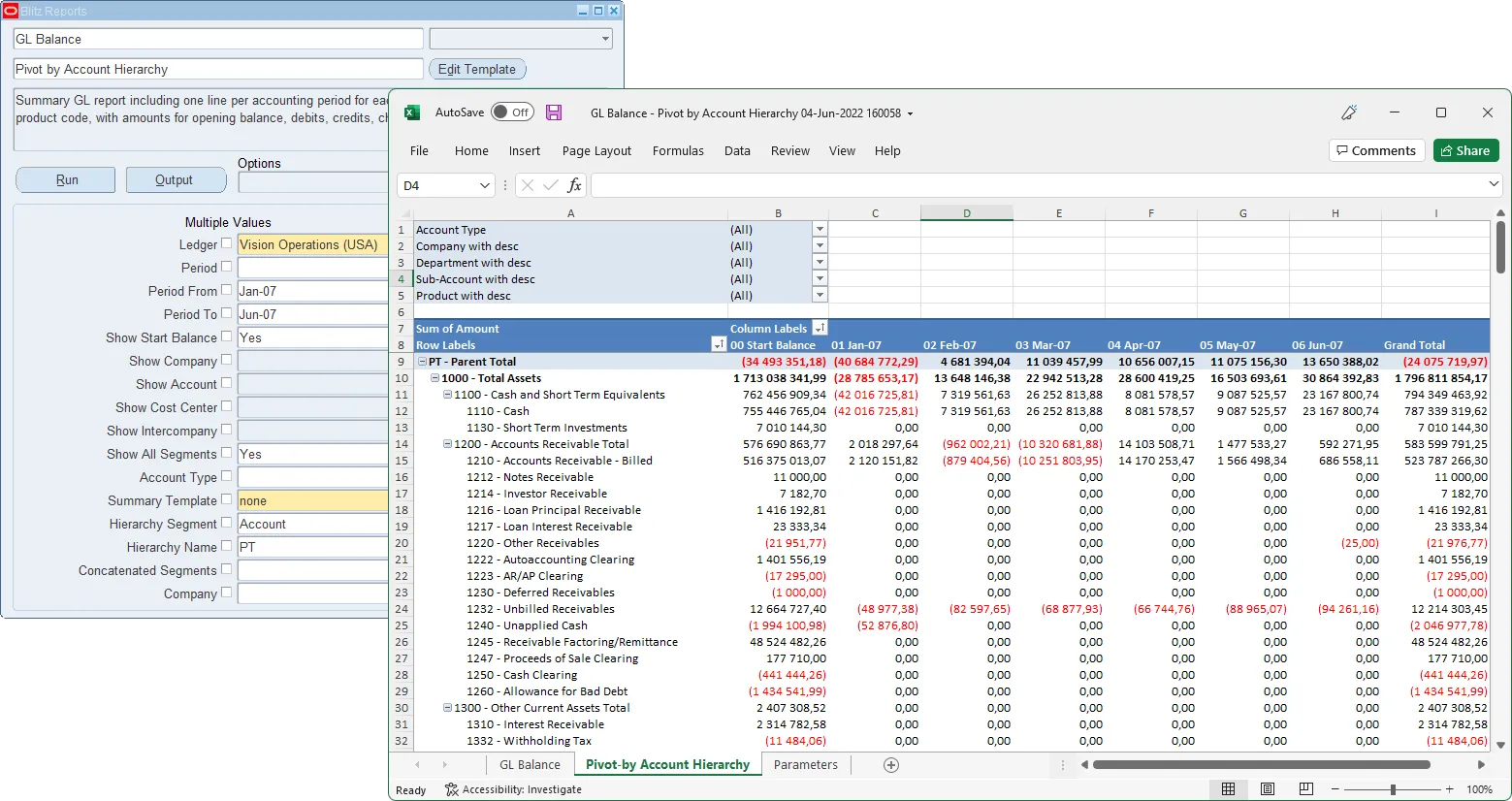
The Filters, Columns, Rows and Values fields are used to create and deliver the data in pivot table format with full drill down to details.
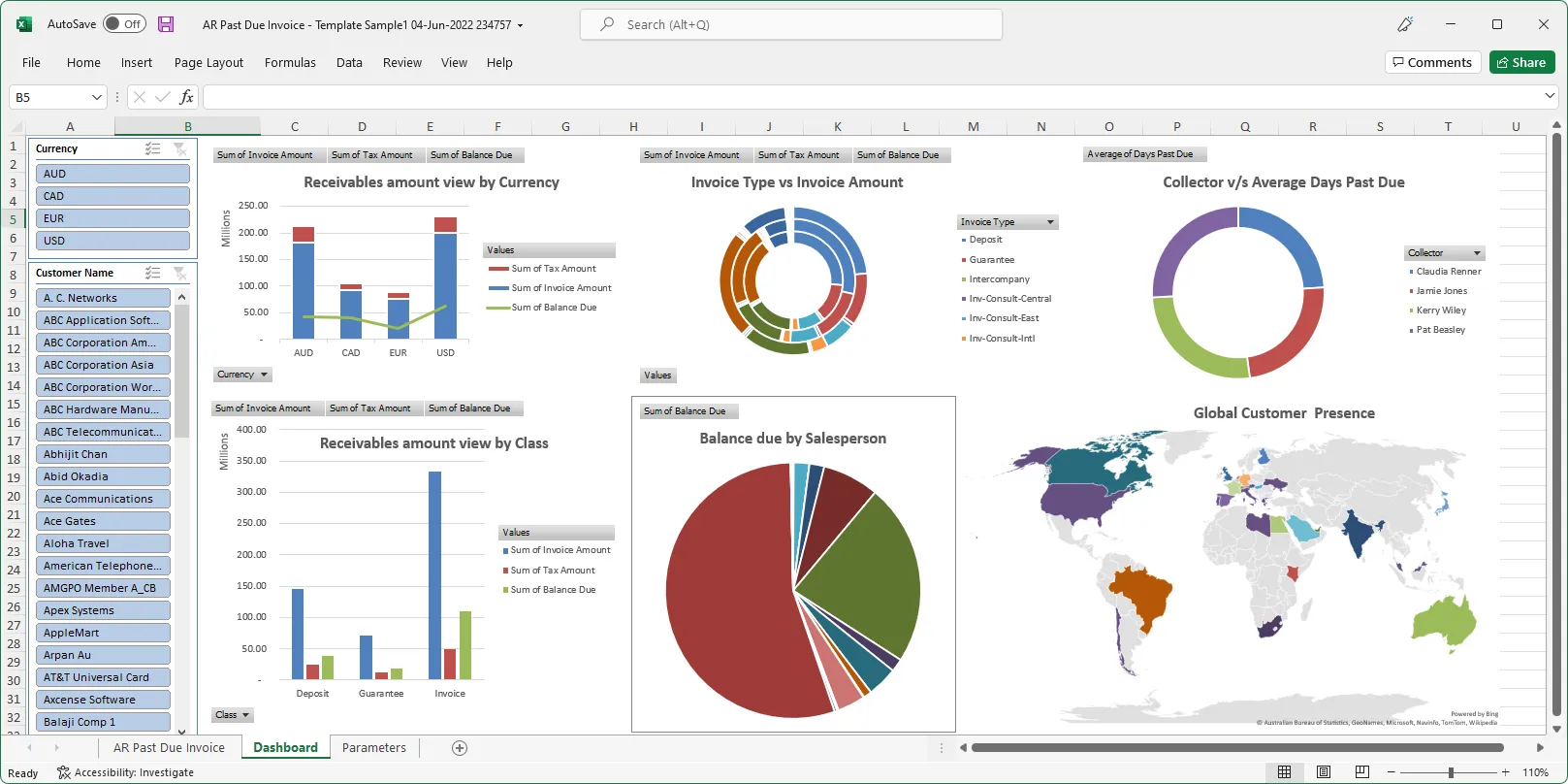
The Excel template upload functionality in Blitz Report allows users to create their own layouts by uploading an Excel template with additional sheets and charts, automatically refreshed when the report runs again. This allows to create custom dashboards and more advanced visualizations of report data.
You can download and use Blitz Report free of charge for your first 30 reports.
The installation and implementation process usually takes less than 1 hour; you can refer to our installation and user guides for specific details.
If you would like to optimize your Oracle EBS implementation and or operational reporting you can visit www.enginatics.com to review great ideas and example usage in blog. Or why not try for yourself in our demo environment.
Useful Links
Blitz Report™ – World’s fastest data upload and reporting for Oracle EBS
Oracle Discoverer replacement – importing worksheets into Blitz Report™
Blitz Report™ Questions & Answers
Supply Chain Hub by Blitz Report™
© 2025 Enginatics